How Future Cities Will Look Like in 2050!
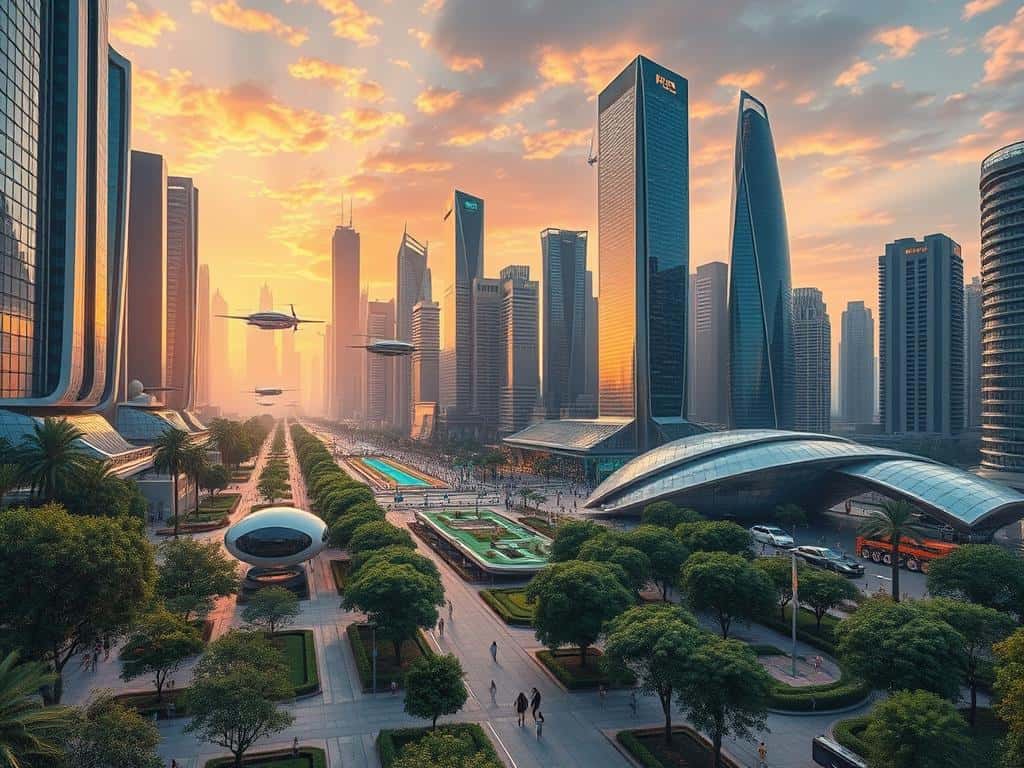
As I walk through my city, I’m amazed by how far we’ve come. Just a few decades ago, the streets were noisy and polluted. But by 2050, I see a different picture: Smart Cities with clean energy and wide, green streets.
By then, over four out of six people will live in cities. This is a big change from the past, when only one in six did.
These cities will be powered by new urban tech. They’ll be connected and sustainable. For example, travel from London to Paris could take under 30 minutes with Hyperloop technology.
These cities will be more than efficient. They’ll be places where you can walk or cycle to everything you need. This idea is called the ‘15 Minute City.’
I’ve seen cities like Kuala Lumpur with SMART tunnels. These tunnels are for both transportation and flood control. I’m excited to see how cities will change to meet the needs of more people.
Key Takeaways
- By 2050, over 66% of the global population will live in urban settings.
- Technologies like Hyperloop will dramatically shorten travel times between major cities.
- Smart Cities integrate urban tech to enhance living standards and optimize resources.
- The ’15 Minute City’ promotes accessible living by ensuring essential services are nearby.
- Multifunctional infrastructure is key for sustainable urban development.
Urban Transformation: The Rise of Smart Cities
Urbanization is speeding up, making Smart Cities more vital. By 2050, 70% of people will live in cities. Cities must meet the needs of their growing populations.
Smart Cities use urban tech and IoT to make life better. They aim to be sustainable and improve living conditions. This approach boosts efficiency and tackles environmental and quality-of-life challenges.
Understanding Smart Cities
Smart Cities use advanced tech to make urban life better. Cities like Helsinki and Oslo aim for carbon neutrality. They use electric transport and renewable energy.
These efforts help cities grow sustainably and create healthier environments. New York’s 2020 smart city pilot shows the goal to reach net zero emissions by 2050.
Innovative Technologies Shaping Smart Cities
IoT and other tech are key to Smart Cities. Cities like Singapore and Zurich are leaders due to their efficient transport and green spaces. These technologies can improve life quality by 10 to 30 percent.
By using data, cities can solve problems like traffic and water waste. Smart monitoring systems help reduce waste and improve efficiency.
Sustainable Living and Environmental Integration
The future of cities is shaped by sustainability, biophilic design, and energy efficiency. As cities grow, adding natural elements is key to better living. I dream of cities where buildings and nature work together, making communities healthier and more lively.
Biophilic Design in Urban Spaces
Biophilic design connects people with nature in cities. Features like green walls, rooftop gardens, and open spaces create calm in busy cities. These elements fight urban heat, improve air, and boost mental health.
Projects that use these ideas show our need for sustainable, people-focused cities.
Energy Efficiency Innovations
Energy efficiency is vital for green cities. Smart grids and energy systems make energy use better. This cuts down on pollution and saves money for cities.
Cities are moving to electric cars and smart transport, lowering emissions. Using renewable energy in city plans shows our dedication to a green future.
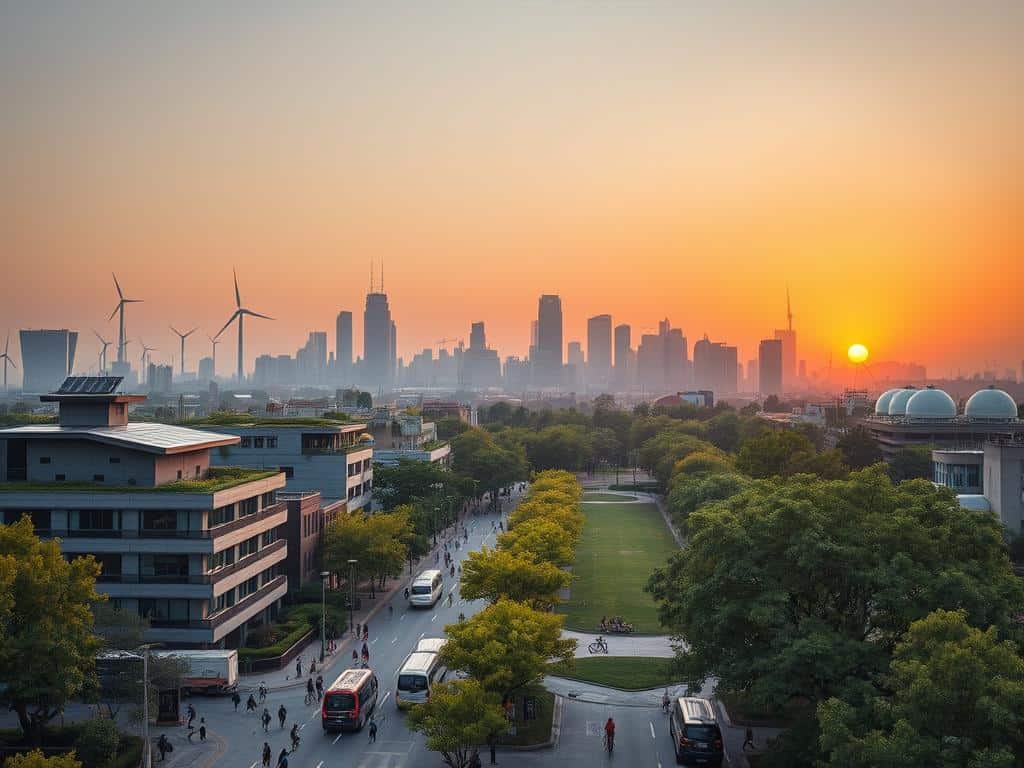
Multi-Purpose Spaces Creating Vibrant Communities
Urban design is changing, focusing on multi-purpose spaces. These spaces are key to building lively communities. They let cities change, hosting many activities and bringing people together.
In the last five years, mixed-use areas have grown a lot. This shows the need for places where people can gather and feel connected. It’s all about creating spaces that draw in visitors and boost community spirit.
Redefining Urban Areas
Mixed-use developments mix homes, shops, and fun spots in one place. These buildings are vital for growing cities, adapting to changing needs. For example, university campuses are becoming hubs of community life, thanks to their large student bodies.
Projects like the AT&T Discovery District in Dallas show how good planning can make cities buzz. They thrive on community involvement, making places where people want to be.
Flexible Buildings for Adaptable Use
The future of cities depends on buildings that can change with the times. These spaces host markets, cultural events, and fun activities. They engage the community in many ways.
Places like AREA15 in Las Vegas are proof of innovative design’s power. They attract lots of visitors and help local businesses grow. Placemaking efforts make these spaces even better, meeting local needs and building community pride.
Conclusion
Looking ahead to 2050, smart cities offer a hopeful future for urban life. They promise to blend technology, sustainability, and community, making cities lively and sustainable. With 65% of the world’s population expected to live in cities, it’s critical to build places that are green and meet everyone’s needs.
More people are getting excited about smart cities. This is shown by the rise in articles and studies, like the IESE Cities in Motion Index. Cities like Zurich and Helsinki are leading the way, showing it’s possible to grow economically while caring for the environment.
Working together is key for smart cities’ success. We need local governments, tech companies, and communities to team up. By tackling issues like unequal access to technology and handling data well, we can make sure everyone benefits. It’s our duty to create cities that are open, flexible, and good for everyone’s life quality.
