Fix Your Posture & Boost Productivity at Work!
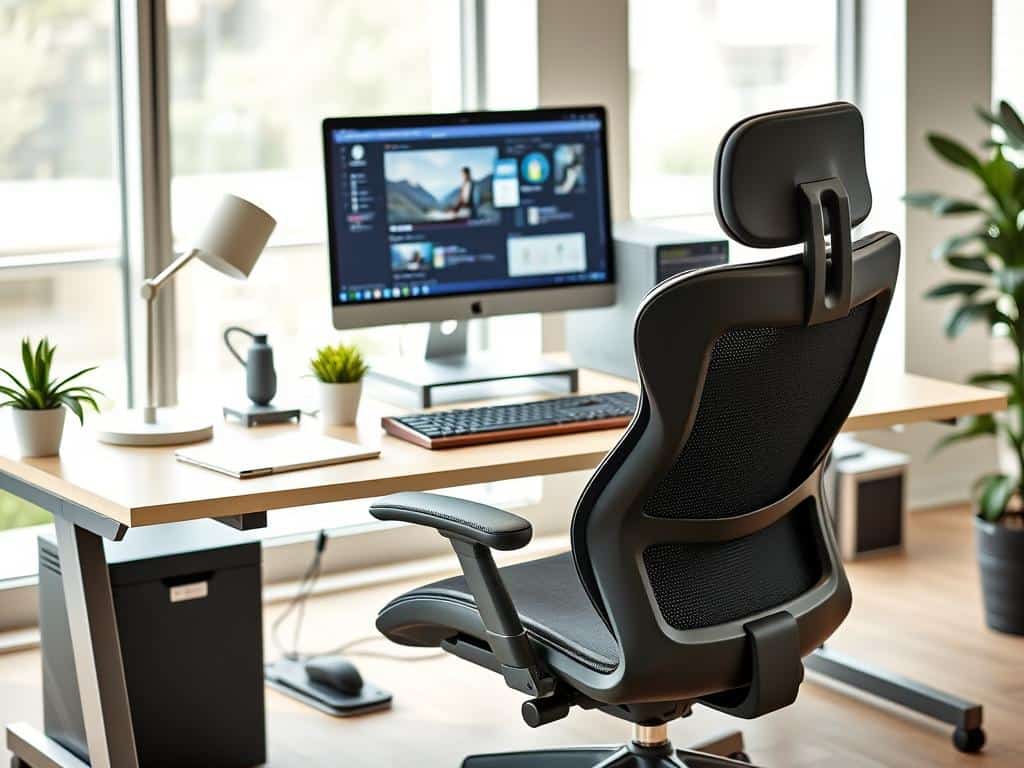
In the early days of my career, I was always under pressure, stuck at my desk for hours. I had heard about office ergonomics but didn’t take it seriously until back pain hit me hard. A colleague’s simple desk change tip made me realize the importance of posture and workspace.
Did you know 31% of workplace injuries are from musculoskeletal disorders? This shows how bad posture hurts many, affecting our health and work efficiency.
Learning about the “sitting disease” was a wake-up call for me. I started taking movement breaks and tweaking my desk. It’s not just about personal comfort; ergonomic solutions can boost work productivity and reduce discomfort. Fixing your posture can make your work life happier and healthier.
Key Takeaways
- Musculoskeletal disorders made up 31% of workplace injuries in 2015.
- Prolonged sitting can contribute to several health conditions, classified as “sitting disease.”
- Regular movement breaks every 30 minutes can combat health risks from sitting.
- Ergonomic adjustments can improve posture and reduce pain.
- Companies investing in ergonomics can see a return on investment of up to $3 for every $1 spent.
Understanding the Importance of Office Ergonomics
Office ergonomics is key to a good work experience. A well-designed office boosts productivity and focus. Poor posture can distract and reduce work efficiency.
It’s important to understand how posture affects work, as we often sit for long hours.
The Link Between Posture and Productivity
Good posture boosts productivity. Studies show that correct alignment improves comfort and oxygen flow, reducing fatigue. Sitting wrong can cause discomfort and health issues, making it hard to focus.
Employees who focus on ergonomics feel healthier and more willing to work. This is vital, as office workers often sit for 15 hours a day.
Health Risks Associated with Poor Posture
Ignoring ergonomics can harm health. Poor posture leads to neck strain, back pain, and headaches. It also increases the risk of obesity, high blood pressure, and heart disease.
Workplace injuries cost businesses over $58 million yearly. Repetitive motion injuries alone cost $1.5 billion annually. These costs show the health risks of poor ergonomics.
Implementing Ergonomic Solutions for a Better Workspace
Creating a workspace that’s both comfortable and productive is key to doing well. Good workstation design uses ergonomic solutions that fit each person’s needs. A well-designed desk setup can greatly improve your posture and health.
Creating an Ergonomically Designed Workstation
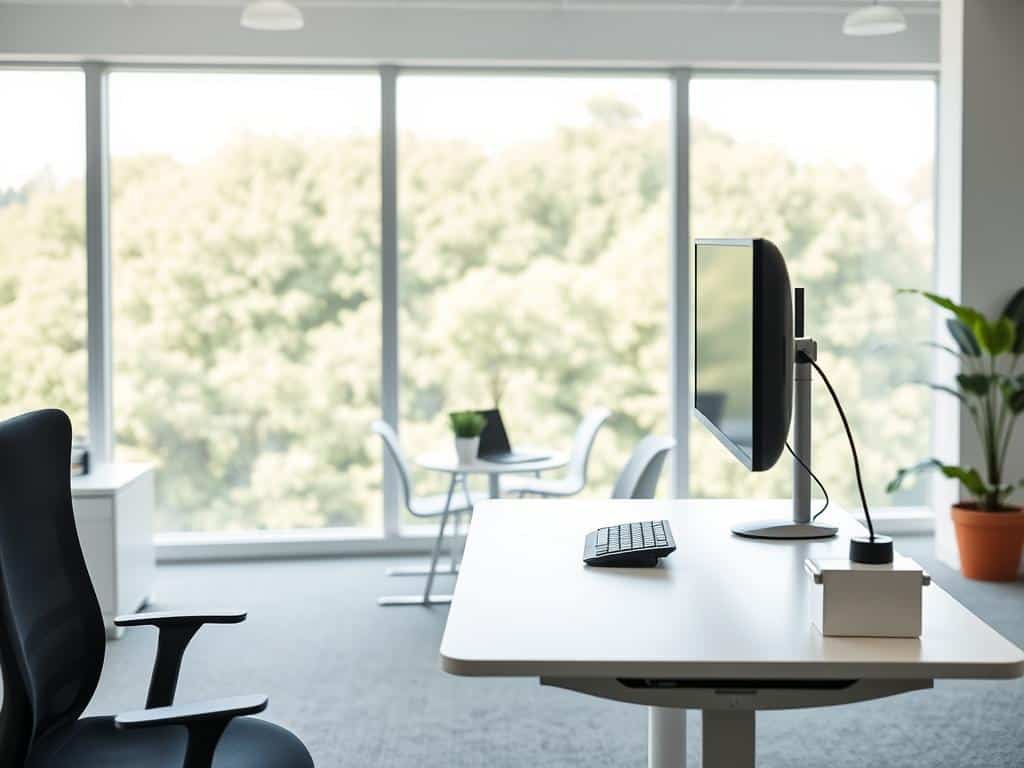
To make a workspace ergonomic, focus on a few important things. First, your monitor should be at eye level to avoid neck pain. It should be 20 to 40 inches from your eyes for the best view.
Keeping your knees at a 90-degree angle with feet flat on the floor is essential for comfort. Adjust your desk height to fit these needs well. This can cut the risk of musculoskeletal disorders by up to 50%.
Take regular breaks and change positions every 30 minutes. This can greatly reduce discomfort.
Choosing the Right Office Furniture
Quality office furniture is important for a healthy posture. An ergonomic chair with strong lumbar support can boost productivity by 17%. Adjustable furniture lets you switch between sitting and standing, promoting movement and reducing back pressure.
Companies that use these ergonomic solutions might see lower healthcare costs, less absenteeism, and better employee engagement. Using a headset for phone calls can also reduce neck strain compared to holding a phone.
Conclusion
Office ergonomics is key to better posture and more productivity. Bad ergonomics can hurt workers’ health, leading to many injuries. By using ergonomic solutions, we can make our workspaces safer and more comfortable.
Studies show that better ergonomics can make workers 20-25% more productive. Simple changes, like a good chair and following the 20-20-20 rule, can make a big difference. The U.S. loses $300 billion a year because of poor ergonomics, making it a smart choice for businesses and individuals.
By focusing on ergonomics, we can improve our work and health. It’s not just good for our jobs but also for our overall well-being. Let’s make our workplaces better for a healthier and more productive life.
