Grow Your Own Herbs Indoors with These Easy Tips!
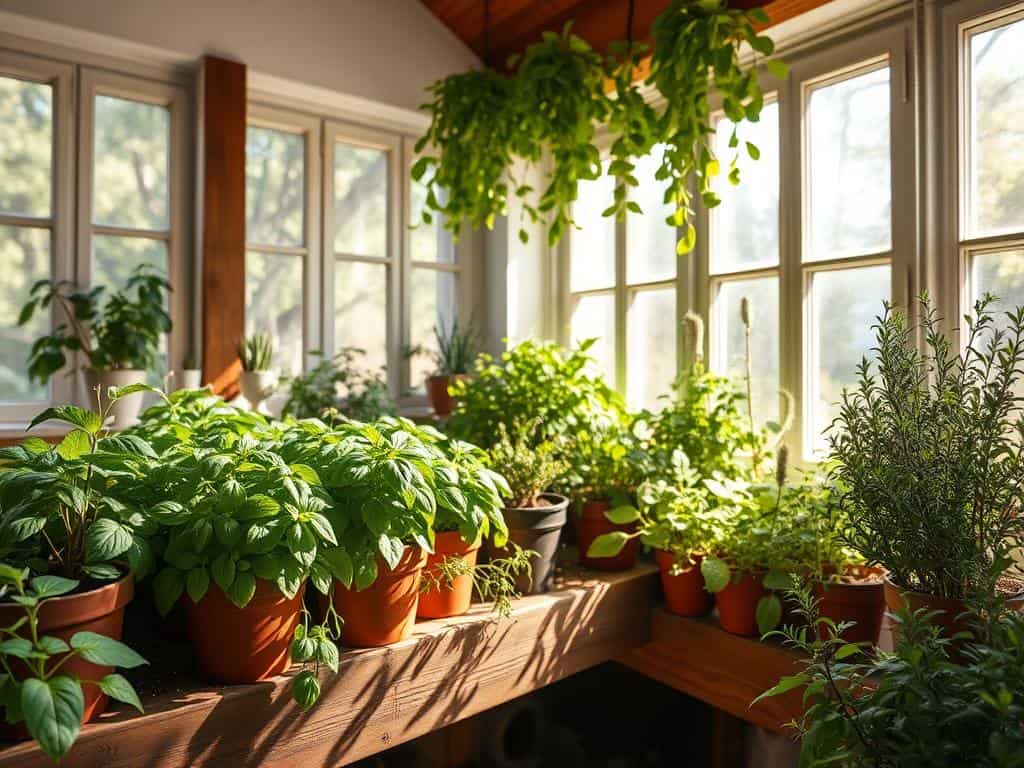
On a chilly winter morning, I missed the fresh herbs from summer. I thought, why not grow my own indoor herb garden? I imagined using fresh basil in pasta, parsley on eggs, and mint in drinks. Little did I know, growing herbs indoors would make my kitchen vibrant all year.
Growing indoor herbs is a fun way to enjoy gardening. It’s rewarding to know your ingredients are fresh and chemical-free. Whether you’re new to gardening or experienced, growing indoor herbs is a great adventure.
Key Takeaways
- Indoor herbs need at least 6 hours of sunlight daily for best growth.
- Herbs like mint, parsley, and thyme do well in west-facing windows.
- The best temperature for most indoor herbs is 65 to 70 degrees Fahrenheit.
- Regular fertilization helps plants grow, even when you’re harvesting.
- Indoor herb gardens can make your cooking more flavorful with fresh ingredients.
- Hydroponic systems make growing herbs easy and help with nutrient delivery.
Benefits of Growing Indoor Herb Gardens
Creating an indoor herb garden has many benefits, great for those who love cooking with fresh ingredients. Having herbs like basil, parsley, and thyme on hand makes meals better and more enjoyable. Growing these herbs indoors means I can enjoy their fresh flavors all year, making my dishes even more delicious.
Access to Fresh Ingredients All Year Round
Indoor herb gardens provide fresh ingredients all year, even when it’s cold outside. Herbs like mint and chives are easy to care for, needing little water and light. I’ve learned that a packet of basil seeds is a smart buy, saving money compared to buying fresh herbs at the store, which can cost over $3 for a small amount.
Enhanced Flavor Profiles in Cooking
Using fresh herbs makes dishes taste better. A sprinkle of homegrown basil or parsley can turn a simple meal into a feast. Fresh herbs have a flavor that dried ones can’t match. Gardening indoors saves money and brings a world of flavors into my kitchen.
Choosing the Right Location for Your Indoor Herb Garden
Starting a thriving indoor herb garden means picking the right spot. This spot greatly affects how well your herbs grow. Most herbs need 4 to 6 hours of direct sunlight each day.
A south-facing window is usually the best for herbs. It gives them the light they need to grow well. If your herbs look leggy or their leaves are small, they might not get enough sunlight. You might need to change their spot.
Understanding Sunlight Needs
The amount of sunlight affects how fast herbs grow and how they taste. To help them grow well, you need to keep the right conditions. Most herbs do best with over 6 hours of sunlight a day.
If there’s not enough natural light, grow lights can help. They give the plants the light they need to stay healthy.
Best Windows for Different Herb Varieties
Each herb needs different amounts of light. Choosing the right window is important. For example, basil and thyme love bright sunlight and do well near south-facing windows.
Mint, on the other hand, can handle a bit less light. It might do well in an east-facing window. Watching how your herbs do and making changes can help find the perfect spot for each one.
Using Grow Lights for Optimal Growth
If sunlight is not enough for your indoor garden, grow lights can make a big difference. These lights give the right kind of light for plants to grow. I’ve found that LED grow lights work well, even on cloudy days.
Keeping the lights on for 12 to 14 hours a day helps your herbs grow strong and flavorful. This turns your indoor garden into a lively place full of fresh herbs.
Essential Tips for Maintaining Your Indoor Herb Gardens
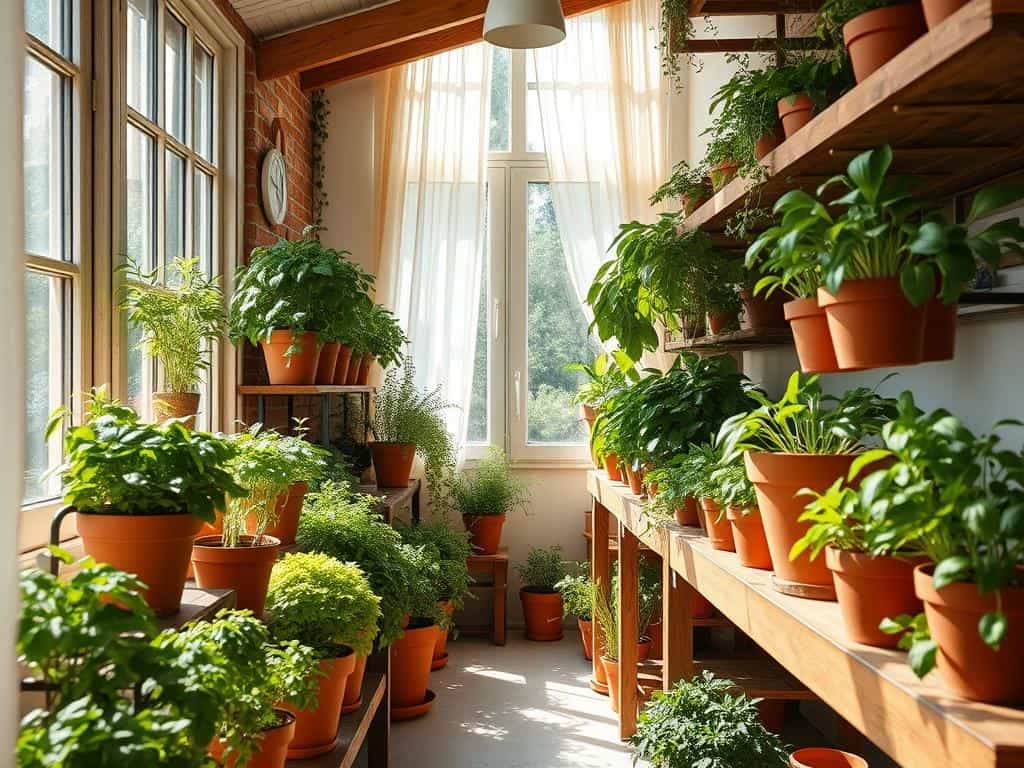
Keeping indoor herb gardens can be rewarding. It requires some key practices for your herbs to grow well. These include the right watering, choosing the best potting mix, and keeping an eye on temperature and humidity.
Watering and Drainage Practices
Proper watering is key to avoid overwatering, a common mistake. I check the soil’s top inch; if it’s dry, it’s time to water. Pots with drainage holes help prevent root rot by letting water out.
Using saucers to catch water helps keep things clean and ensures roots stay healthy.
Choosing the Right Soil and Potting Mix
For potting mix, a mix made for containers is best for indoor herbs. I add perlite or sand to improve drainage and aeration, which is important for herbs that don’t like moisture. The right mix gives my herbs the nutrients they need without too much water.
Temperature and Humidity Considerations
Keeping the right temperature and humidity is essential. Most herbs grow best in temperatures between 65°F and 75°F. Nighttime temperatures should be between 50°F and 60°F. I aim for humidity levels of 40% to 60% to help them grow well.
Regular checks help spot pests early, keeping my garden healthy and thriving.
Conclusion
Starting an indoor herb garden has opened up a world of flavors for me. I can enjoy fresh tastes all year. Growing herbs at home brings many benefits, like better taste and the joy of watching plants grow.
Learning about sunlight and care is key for healthy herbs. I’ve found that the right spot for each herb is essential. This could be natural light or grow lights. Soil quality and watering are also critical for my herbs’ health.
Keeping a consistent temperature and fertilizing regularly helps my herbs thrive. Indoor gardening has made my cooking better and helped me live more sustainably. I’m excited to keep growing my herbs and encourage others to do the same.
