The Best Houseplants for Cleaner Air!
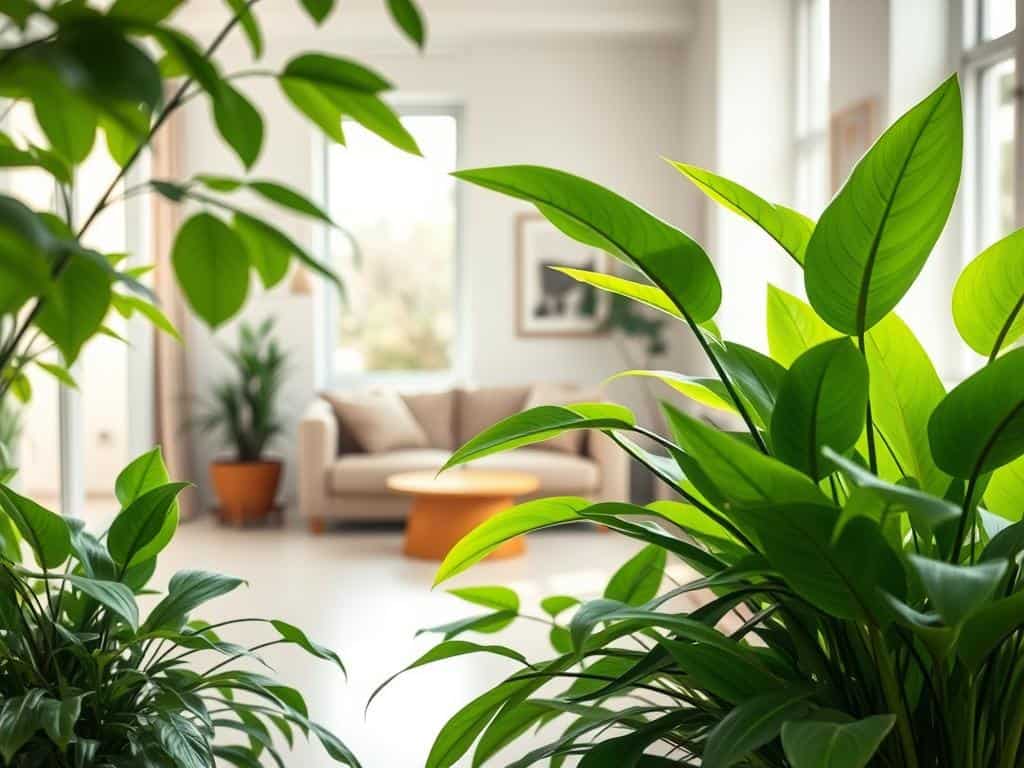
As I entered my friend’s living room, the scent of fresh greenery enveloped me. The sun lit up the room, showing off the lush plants swaying in the breeze. These plants had turned her home into a vibrant green oasis. With every breath, I felt the air freshen, as if it was alive.
Houseplants do more than look good; they also clean the air and make our homes healthier. NASA studies show that certain plants can remove harmful chemicals like formaldehyde and benzene. In a world where we spend most of our time indoors, these plants are essential for clean, healthy spaces.
Whether I’m dealing with allergies or just want fresher air, adding plants helps. Let’s look at some top houseplants that act as natural air purifiers. They help make our homes fresher and healthier.
Key Takeaways
- Houseplants can improve indoor air quality by removing harmful pollutants.
- NASA research highlights specific plants’ effectiveness in air purification.
- Indoor plants contribute not only to aesthetics but also to overall home health.
- Breathing cleaner air can positively impact mood and reduce stress.
- Many houseplants offer low-maintenance options for busy lifestyles.
Introduction to Houseplants and Their Benefits
Most of our lives are spent indoors, where air pollution can be worse than outside. Houseplants are more than just decorations; they clean the air naturally. NASA’s 1989 study showed that some plants remove harmful chemicals like formaldehyde and benzene.
These plants not only take in carbon dioxide but also release oxygen. This makes the air inside our homes better to breathe.
Houseplants are key in fighting indoor pollutants and boosting humidity. This is great for our lungs. The soil of potted plants has microorganisms that clean the air and might even help fight depression.
Being around plants can also reduce stress and improve focus. Studies show that greenery can make us feel less anxious and depressed.
Plus, taking care of indoor plants can make us feel more at ease and happy. A study from Scandinavia found that plants make people feel better. Using air purifiers and houseplants together might make the air even cleaner.
Popular Houseplants for Improving Air Quality
Improving indoor air quality can make us feel better. Certain houseplants are great at removing harmful toxins. These plants not only look good but also make the air healthier. Let’s look at some top picks for better air and beauty.
Spider Plant (Chlorophytum comosum)
The Spider Plant is top-notch at removing toxins like formaldehyde and xylene. It’s easy to care for and grows well in different lights. Water it regularly and trim it now and then to keep it working hard.
Snake Plant (Sansevieria trifasciata)
The Snake Plant is great for busy people. It cleans the air of pollutants like benzene and nitrogen oxides. It can even grow in low light. Just water it every few weeks to keep it happy.
Peace Lily (Spathiphyllum)
The Peace Lily is a top pick for cleaner air. It removes toxins like formaldehyde and benzene. It also helps keep the air moist, which is good for your lungs. It likes indirect light and moist soil.
Aloe Vera (Aloe barbadensis miller)
Aloe Vera is known for healing skin and improving air quality. It gets rid of formaldehyde and benzene. It likes bright, indirect light and only needs water when the soil is dry.
Boston Fern (Nephrolepis exaltata)
The Boston Fern is great at purifying the air, removing toxins like formaldehyde. It loves humid places, making it perfect for kitchens or bathrooms. It needs indirect light and lots of water to stay healthy.
Houseplants & Air Quality: A Natural Solution for Indoor Pollutants
Houseplants can help fight indoor pollutants. Studies show they can filter harmful substances, but their success depends on the plant and its environment. A famous 1989 NASA study found plants could clean air in closed spaces.
This study made many think houseplants could greatly improve home air. But, the U.S. Environmental Protection Agency later found some issues. For example, a typical home would need about 680 plants to match NASA’s results, which is hard to do.

Houseplants do take in carbon dioxide through photosynthesis. But, the idea that they remove many indoor pollutants is not proven. Some plants might even release harmful chemicals, making air worse in some cases.
Using houseplants is a good choice for making homes better. They make spaces look nicer and bring nature inside. Even if they don’t clean the air as much as hoped, they can make homes feel better and remind us of nature’s beauty.
Conclusion
Adding houseplants to our homes offers many benefits, like better air quality. We spend about 90% of our time indoors, making clean air essential. Studies show that indoor plants can cut down harmful pollutants like formaldehyde and benzene, helping our breathing.
Houseplants also make our homes look better and improve our health. In India, the government found that plants reduced eye irritation, breathing problems, and headaches. This shows how plants can greatly enhance our health and comfort.
So, I suggest adding some houseplants to your home. They do more than just look good. They help create a greener, healthier space. With the right plants, you can enjoy cleaner air, better health, and a lively home.
