AI vs. Humans: Is Your Job at Risk?
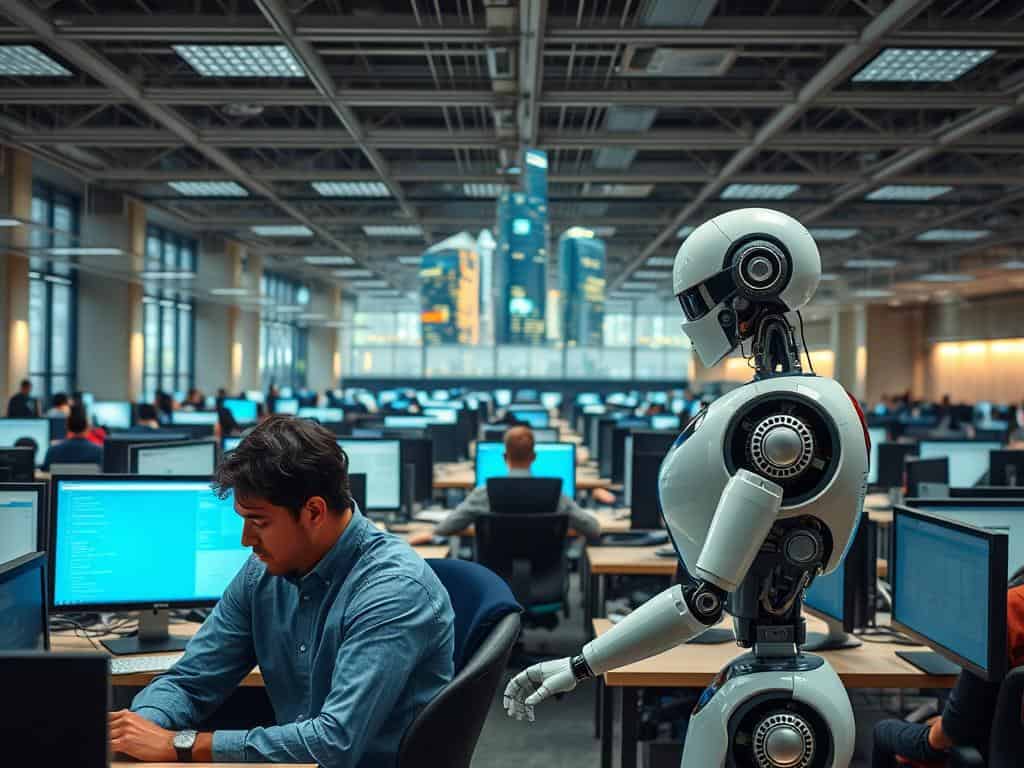
Standing in the break room, I felt a chill as my colleagues talked about layoffs. The talk of artificial intelligence was everywhere. A big tech company had just shown off a new AI tool that could do tasks that humans used to do. This made the future of work seem shaky.
Was my job safe? I thought about how automation could make work more efficient but also risk jobs. It was a scary thought. Was this progress or a danger to our jobs? With AI changing the workplace, it’s key to understand its impact on our careers.
Exploring AI further, I saw its complexity. While jobs like data entry and customer service might be at risk, there’s hope for jobs that need creativity and problem-solving. Could AI change jobs, not just eliminate them? Only time will tell as we explore this new world.
Key Takeaways
- AI is effective at automating repetitive, data-driven tasks.
- Jobs at risk include data entry clerks, telemarketers, and retail cashiers.
- Healthcare professionals and creative roles are expected to thrive in an AI-driven market.
- Learning to collaborate with AI may become critical for job security.
- Continuous education and retraining will be vital for adapting to automated environments.
The Impact of AI on Job Security
The rise of AI brings both good and bad news for jobs. Machines are getting smarter and can do more tasks, making some jobs obsolete. Before, robots mainly did physical jobs, but now they’re taking on mental tasks too.
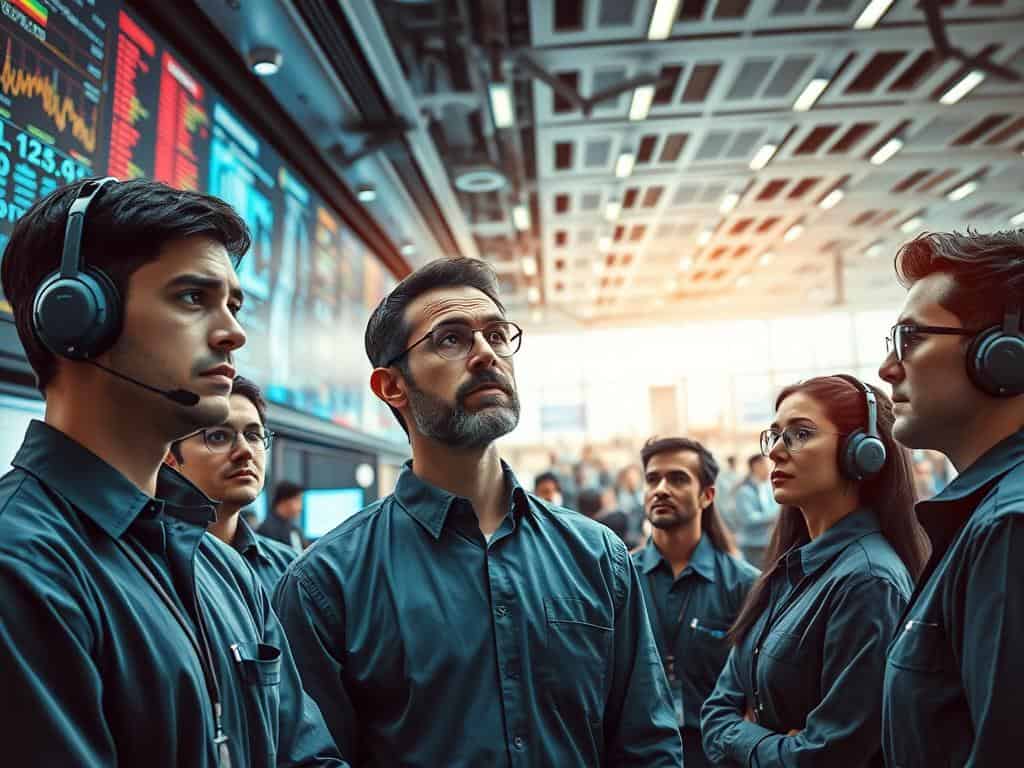
This change is worrying many, including those in law, finance, and tech. It’s feared that AI could soon do many jobs that humans do now. By 2030, up to 30% of work hours in the U.S. might be automated, making job security a big concern.
Understanding AI and Its Capabilities
AI can do a lot more than it used to. It can help make better decisions, which could change how we work. About 19% of American workers are already using AI in their jobs.
Many believe AI will help them do their jobs better, not replace them. This shows a growing understanding that AI can make work more efficient. It’s changing how we see our jobs.
Demographic Disparities in AI Exposure
AI’s impact is not the same for everyone. Some groups, like women and those with a college degree, are more likely to see their jobs change. For example, 27% of college-educated Americans are in jobs heavily affected by AI, compared to 12% of high school graduates.
Racial disparities also exist. Asian and White workers are more likely to face AI’s impact than Black and Hispanic workers. Knowing these differences is important as we all face an automated future.
Future of Work: Adapting to Change
AI automation is changing the job world a lot. It’s important to know which jobs might not exist anymore. Jobs like data entry clerks, customer service reps, and cashiers are at risk because companies want to save money and work faster.
Research shows that more than half of today’s jobs could be automated. This means many jobs could change or disappear. It’s making job security a big worry in many industries.
Identifying Jobs at Risk of Automation
Studies say about 20% of business travel might not come back after the pandemic. This could hurt jobs in areas like hospitality and aerospace. People without a college degree might find it harder to keep their jobs.
They might need to change careers. This is because AI is making some jobs less needed.
Evolution of AI-Augmented Jobs
AI is changing jobs, but it’s not all bad. Many jobs are becoming better with AI. Jobs that need creativity, emotional smarts, and complex thinking are growing.
Jobs in healthcare and education are examples. AI helps with simple tasks, so people can do more important work. Learning new skills like critical thinking is key to keeping up with these changes.
Conclusion
We are at a critical point in the future of work, with AI playing a big role. Automation might change some jobs, like in manufacturing and retail. But, it’s not just about losing jobs. It’s about changing careers as AI becomes more common.
Up to 375 million workers might need new training or jobs by 2030. This shows we must adapt to the changing workforce. It’s not just about keeping the same job; it’s about growing with new skills.
The fear of 85 million jobs being lost by 2025 is real. But, AI could also create 97 million new jobs, like in data analysis and cybersecurity. This shows we need to learn skills that fit the AI world.
Skills in programming, machine learning, and analysis are key. They help us stay relevant in an AI-driven market. By seeing AI as a tool, not a threat, we can thrive in this new world.
By always learning and adapting, we can stay ahead in the job market. This way, we open doors to amazing new opportunities in a tech-driven world.
