Will Robots Take Your Job? The Future of Work Explained!
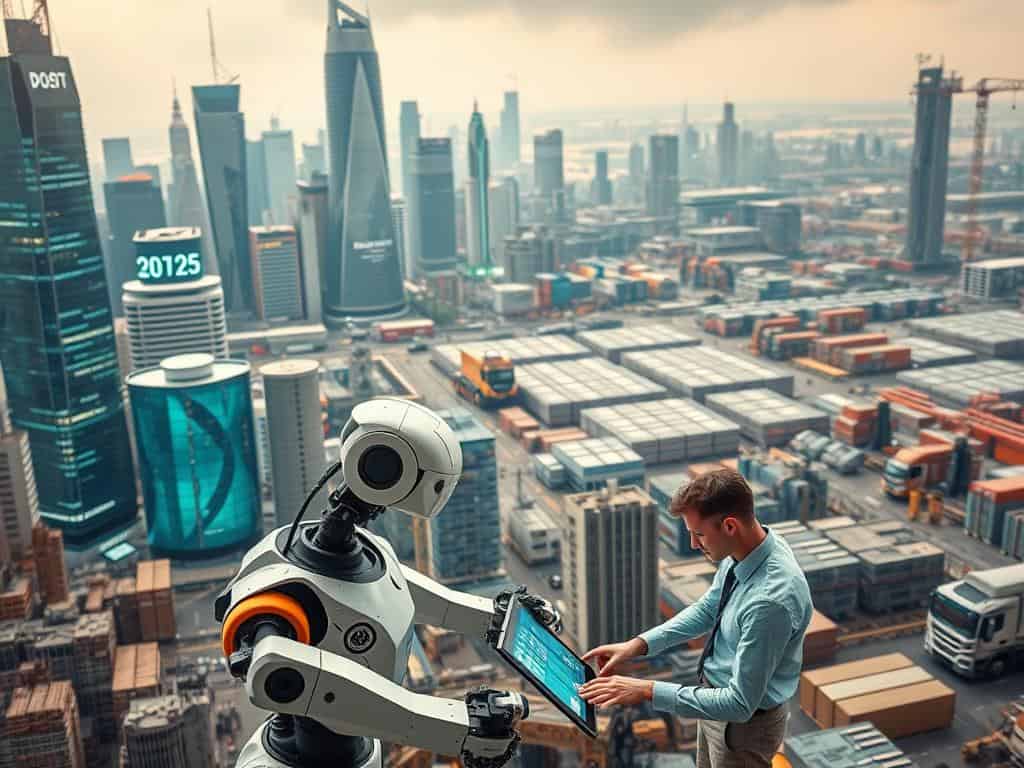
In a cozy café, I heard two tech-savvy friends talking about their jobs. One had just learned about artificial intelligence (AI) and thought automation was the future. The other was worried about losing their job. Their chat made me think of the 1990s and ATMs changing banking.
Back then, bank tellers worried ATMs would replace them. But, surprisingly, the number of bank tellers actually went up. This showed how technology can lead to new jobs, even when it changes old ones. This made me wonder: Will robots take our jobs, or will we find new ways to succeed?
In this article, I’ll look at how automation and AI are changing work today. We’ll see how these changes can both take away jobs and create new ones. It’s all about finding a balance.
To understand the future of work, we need to learn from history and listen to experts. As we explore automation, we’ll look at examples and learn lessons. These lessons can help us prepare for the changes coming our way.
Key Takeaways
- Automation has historically transformed job roles while creating new opportunities.
- AI advancements could lead to significant job market shifts by 2030.
- Industries will adapt to automation differently based on specific job requirements.
- Collaborative robots (cobots) enhance worker efficiency without replacing them.
- Embracing new skills will be key to navigating the future job landscape.
- The evolution of jobs will depend on technological, economic, and demographic changes.
The Impact of Automation on Employment
The link between automation and jobs has sparked a lot of debate. Automation has changed the job scene, bringing both hurdles and chances. For example, ATMs in the 1980s changed banking, showing how tech can alter jobs without causing big job losses. Instead, it often leads to new jobs in areas that embrace new tech.
Historical Perspectives on Automation
Automation has been around for ages, from simple machines to advanced AI. The manufacturing world has led the way, using robots, like in car making. Now, even food service is seeing more automation, with fast-food places using robots to work better.
Statistics on Job Displacement and Creation
Today’s job market shows a worrying trend. About 50% of jobs could be automated with current tech. A McKinsey study says only 5% of jobs might be fully taken over by machines. But, jobs in driving, retail, and healthcare could change a lot.
The World Economic Forum says 85 million jobs might be lost, but 97 million new ones could be created thanks to AI. People with higher education are less likely to lose their jobs because their work needs complex skills.
Automation vs. Augmentation
It’s key to tell the difference between automation and augmentation. Automation aims to replace simple tasks, while augmentation makes human work better. Jobs that need emotional smarts, creativity, and direct management are less likely to be automated.
As AI gets better, tasks that need social skills and empathy are hard for machines. So, it’s vital to focus on developing skills like communication and analysis to stay ahead in the job market.
The Future of Work: Insights and Predictions
As we look ahead, the world of work is changing fast. AI and robotics are leading the way. Experts say it’s key to understand job market changes and how they affect different industries.
The shift is big, with remote work and changes in the workforce playing a big role. These changes are reshaping our professional lives.
Expert Opinions on Job Market Changes
About 31% of employees have left their jobs for new opportunities. This shows a big change in how people work. Nearly 50% of those who left during the pandemic don’t plan to go back.
The pandemic made more people choose remote work. Up to 25% more people now work from home. This change makes companies think differently about keeping and attracting employees.
Industry-Specific Implications
AI and automation affect different industries in different ways. Companies are focusing on training their workers for the future. For example, those who adopt hybrid work models are likely to do well.
Hybrid work lets companies reach a wider range of talent and save money. Experts say it’s important to tailor strategies for each industry. This helps address why people leave their jobs.
Companies are also making diversity, equity, and inclusion a priority. This can unlock a lot of human talent. Understanding these trends is key to navigating the future of work.

Conclusion
The future of work is complex, with automation affecting jobs. It might take away 30% of jobs by 2030. Yet, it also creates new opportunities. We need to adapt to these changes.
Workplaces today must be flexible and collaborative. Companies like NASA are changing their ways. They use new tools to manage teams better. This helps teams work together well and grow.
Learning new skills is key in this changing world. By keeping up with technology, we can stay relevant. Embracing both the good and bad sides of automation will help us succeed.
