Face ID vs Fingerprint: Which is Safer?
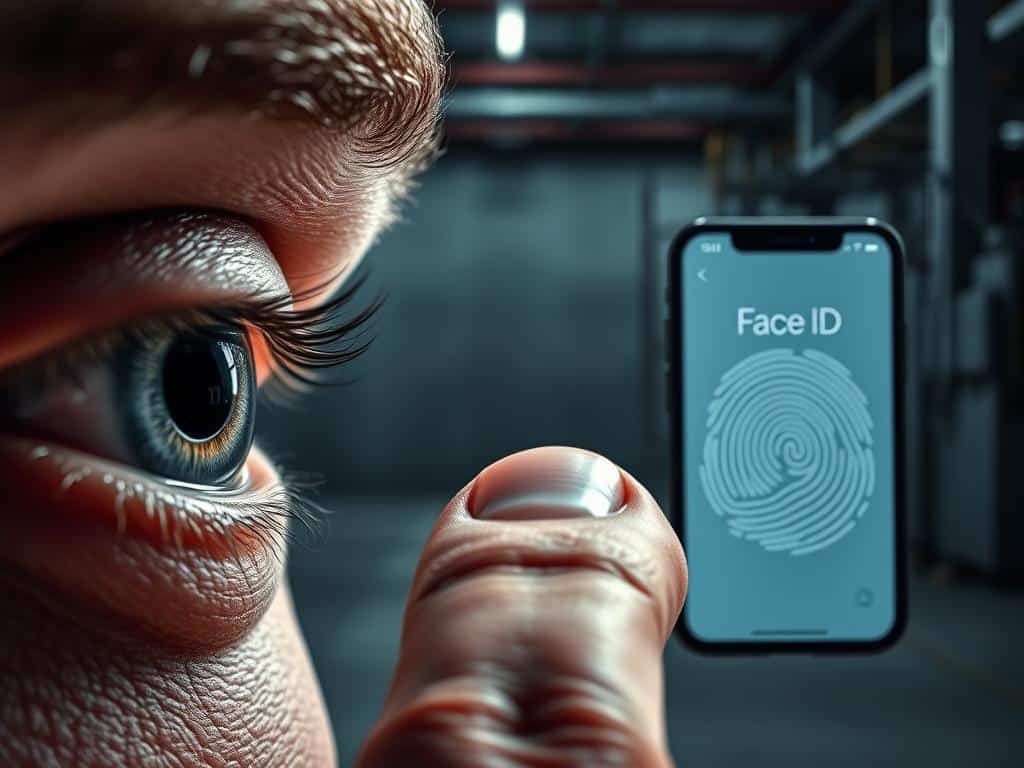
In today’s world, we worry a lot about cybersecurity and privacy. Our phones hold a lot of personal info. I was at a coffee shop, trying to unlock my phone with Touch ID. But my wet fingers kept failing.
Looking around, I saw others easily unlock their phones with just a glance. This made me wonder: Are we moving from Touch ID to Face ID? Both promise to keep our info safe. So, I decided to find out which one is safer.
Biometric security is now a big part of our lives. Knowing the differences between Face ID and Touch ID helps us protect our digital world better.
Key Takeaways
- Face ID has a probability of less than 1 in 1,000,000 for unauthorized access.
- Touch ID has a higher chance of being fooled, with a 1 in 50,000 success rate on the first attempt.
- Facial recognition technology offers contactless operation, making it more hygienic and convenient.
- Fingerprint scanners can be affected by the condition of the finger (wet or dry).
- Face ID systems require less maintenance than fingerprint sensors, which need regular cleaning.
Understanding Face ID Technology
Face ID technology has changed how we use our devices. It’s a smart way to replace old password methods. Apple introduced it with the iPhone X in 2017. It uses a TrueDepth camera to map your face, making it safer and more secure.
How Face ID Works
Face ID uses a TrueDepth camera to project dots on your face. It creates a detailed map. Then, the device’s neural engine compares this map to your stored data.
This makes it very hard for someone else to unlock your device. It’s less than 1 in 1,000,000 with just one try. This shows how secure Face ID is, keeping your privacy safe.
Advantages of Face ID
Face ID makes using your device easier and cleaner. You don’t need to touch it to unlock. It works well in different lights, making it useful everywhere.
It also checks if you’re looking at the device, adding more security. Now, Face ID can work even with masks, though it’s not as secure. It makes paying with Apple Pay safer and quicker.
Exploring Touch ID Technology
Touch ID technology is a big step forward in biometric identification. It makes unlocking devices and making payments easy and safe. It’s found in many Apple products and uses fingerprint scanning for secure access.
This system plays a key role in keeping our data safe and private. It does this through fingerprint authentication.
How Touch ID Works
Touch ID captures detailed images of fingerprints from the skin layers. When I touch the sensor, it starts reading my fingerprint. It compares this data with what’s stored in the device.
Over time, Touch ID gets better at recognizing your fingerprint. This means you can unlock your device easily, no matter how you place your finger. It’s a reliable feature.
Advantages of Touch ID
Touch ID has many benefits. It makes unlocking your device or making payments fast. This makes our daily lives easier.
It also keeps your personal data safe through secure fingerprint authentication. Touch ID is very good at recognizing your fingerprint, making unauthorized access very rare. Even if someone tries five times, they’ll need a password to get in.
Touch ID is more than just a security feature. It’s a practical solution that combines safety with convenience.
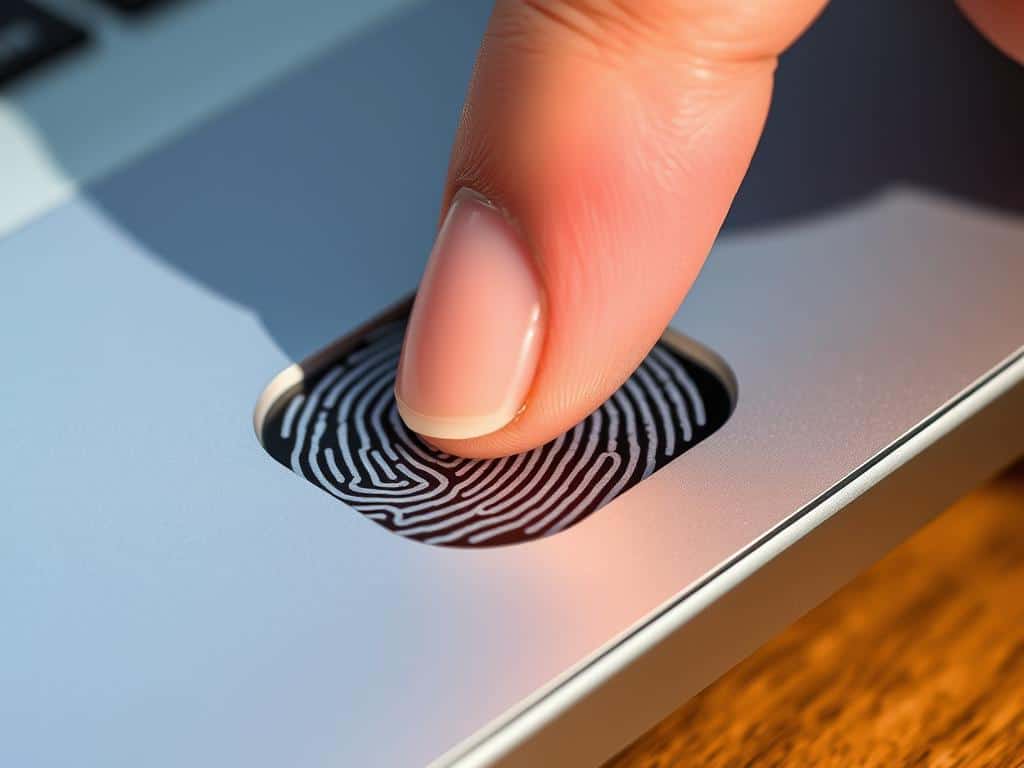
Biometric Security: A Comparison of Face ID and Touch ID
When comparing Face ID and Touch ID, it’s key to look at their security. Face ID uses a TrueDepth camera to map my face with thousands of dots. This method keeps my data safe and private on my device. Yet, it might struggle with identical twins or family members, risking unauthorized access.
Touch ID, launched in 2013, uses fingerprints for authentication. It’s a better choice for privacy because fingerprints are unique. This makes it hard for anyone, even family, to access my device without permission. It’s also great for high-security needs.
The biometric technology comparison also considers how we use them. Face ID works well in many situations but can fail in bright light or with obscured faces. Touch ID, while it can be affected by dirty or moist fingers, is better in private settings, like when I’m sleeping.
Both Face ID and Touch ID have strong detection algorithms to prevent spoofing. But, they differ in privacy. Face ID can unlock without my knowledge, posing a risk. Touch ID, needing my action, adds a security layer I value.
Conclusion
In my exploration of biometric security, I found that Face ID and Touch ID have their pros and cons. This summary helps users decide which one fits their needs better. Face ID is modern and convenient, while Touch ID is reliable and trusted.
The choice between Face ID and Touch ID depends on personal preference and use context. For high-security needs like banking, these systems offer unmatched protection. But, it’s important to know how they store our sensitive data.
I aim to help users protect their personal data by understanding Face ID and Touch ID. Knowing the implications of these technologies is key in our secure future. We must stay alert to their limitations to keep our identities safe.
