Will You Be Able to Upload Your Brain in the Future?
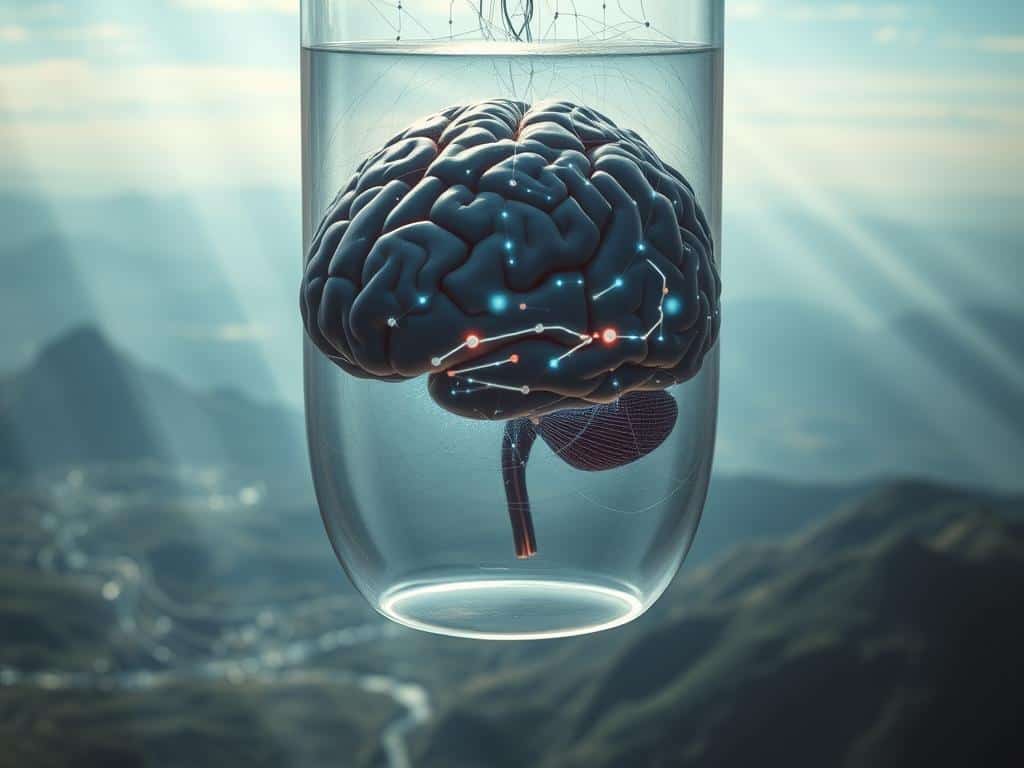
Imagine a world where you can keep living even after your body stops. My curiosity led me to explore brain uploading, a mix of digital consciousness and immortality. In a café, I heard two friends talking about putting their thoughts and memories online.
They wondered if they could live on in digital form instead of saying goodbye the usual way. The mix of science, tech, and ethics in brain uploading caught my attention. This article will dive into the many sides of brain uploading, looking at what we know now and what might come next.
Key Takeaways
- Brain uploading aims to transfer human consciousness into digital form.
- Technological advancements are making the concept of digital consciousness increasingly plausible.
- The quest for immortality raises profound ethical questions about identity and existence.
- Understanding the complexity of the human brain is key for brain uploading progress.
- Neuroscience is already laying the groundwork for future discoveries.
- Successful brain uploading could change how we see life and death.
Understanding Brain Uploading
Brain uploading is a mind-bending idea that makes us think deeply about who we are. It’s about copying our thoughts and feelings into a digital form. This way, our consciousness could live on a computer, making us wonder about life and death.
What is Brain Uploading?
Brain uploading means moving our consciousness into a computer. It’s like creating a digital version of us that thinks and feels like we do. With 90 billion neurons and over 100 trillion connections in our brain, it’s a huge challenge. It’s like trying to map the universe, showing how complex our consciousness is.
Current Perspectives on Human Consciousness and AI
Looking into whole brain emulation gives us a glimpse of brain uploading’s future. We use high-tech MRI to see brain details, but we’re not there yet. The goal is to map every connection in our brain accurately. Even a small mistake could change how we feel, raising big questions about digital life.
Brain uploading sparks conversations about what it means to be alive. Shows like “San Junipero” from Black Mirror explore this idea. As we learn more about our brains and AI, we’re drawn to understanding our digital selves.
Challenges in the Science of Brain Uploading
Brain uploading is a fascinating idea, but it comes with big challenges. I’ve found several key areas that make it hard to achieve.
Data Extraction and Mapping Complexity
One major hurdle is extracting and mapping brain data. The human brain has about 86 billion neurons and 860 billion connections. This means we need huge amounts of data, possibly in zetta bytes.
To upload just one neuron, we might need thousands to millions of pieces of information. Our current tech isn’t up to the task.
The Size and Scale of Human Brain Data
The size of brain data is staggering. Mapping a human brain is a huge challenge. Even mapping a fruit fly’s brain is a long process.
The Human Brain Project is trying to overcome these hurdles. But it’s working with simplified models because of tech limits. This shows we’re not yet ready for the full complexity of human brain data.
Technical Limitations in Current Technology
Despite tech progress, we’re not close to making brain uploading real. Moore’s Law, which drives tech growth, is nearing its limits. This means we might hit a wall in future tech advancements.
Projects like OpenWorm aim to simulate a few neurons. They highlight the complexity and the need for new approaches.
Future Possibilities of Brain Uploading
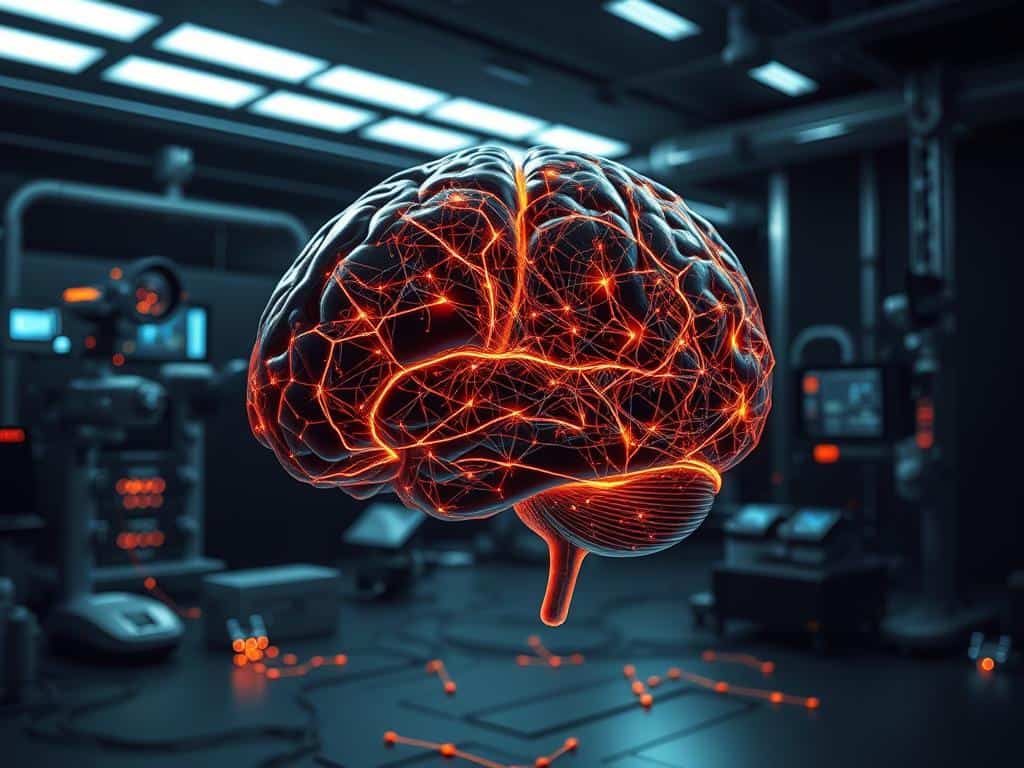
The future of neuroscience is exciting, with brain uploading technology advancing. AI is making it possible for human consciousness to exist beyond our bodies. The blend of neuroscience and computer science opens up new possibilities, but there are big challenges to overcome.
Advancements in Neuroscience and Computer Science
Neurotechnology has made huge strides, like brain-to-computer interfaces. Now, people who can’t move can control computers with their minds. This shows how far we’ve come in understanding the brain.
Experts say it might take a century to fully replicate the human brain. But, the foundation is being laid today. There’s no law of physics that says we can’t upload minds.
Potential Benefits of Successful Brain Uploading
Brain uploading could change everything. A digital mind could live forever, unlike our 80-year bodies. It could take over tasks like management or therapy.
Could uploaded minds lead to new cultural and political changes? They might even surpass what biological humans can do.
The Concept of Digital Immortality and its Implications
Digital immortality is a fascinating idea. It means people could live on in machines, keeping their social and professional lives going. This could fit right into our current society.
But, it raises big questions about identity and self. If we have both a biological and a digital version of ourselves, what does it mean to be a person? These questions make us think deeply about what it means to be alive.
Conclusion
Thinking about brain uploading, we see it’s a dream we’re not close to making real. The idea is exciting, but we face huge technical hurdles. The brain has about 100 trillion connections, making it a massive challenge to copy.
Our current tech isn’t good enough to capture the brain’s complexity. This makes us wonder about the idea of digital immortality.
Brain uploading raises big questions about ethics and what it means to be alive. If we could upload a mind, would it really be alive or just a complex imitation? The lack of agreement shows how science and philosophy are deeply connected in this quest.
In the end, maybe brain uploading is not about living forever but making life better. As I think about these big changes, I’m forced to question what it means to exist. It’s about finding answers and being wise about our future with technology.
