Scientists Say Time Travel Might Be Possible—Here’s How!
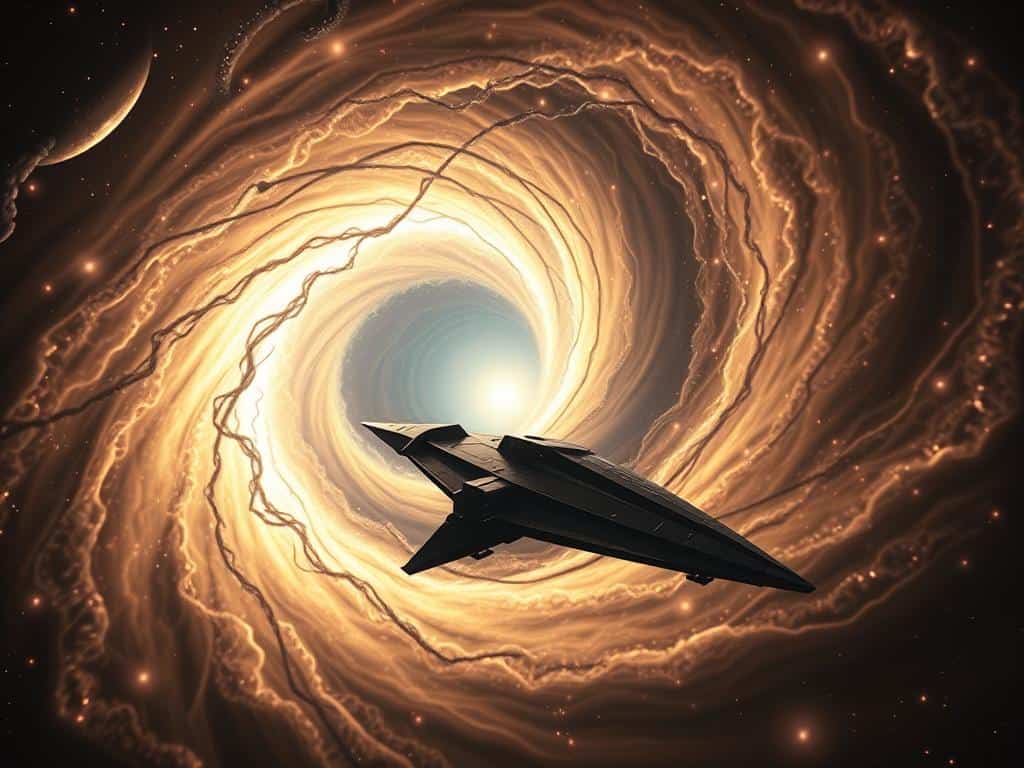
Imagine standing at a crossroads, where the path to your right leads to the glorious moments of yesteryears, while the trail to the left promises exciting adventures yet to come. This thrilling conundrum of choices brings a sense of wonder akin to the concept of time travel. As a child, I would often lose myself in the pages of H.G. Wells’ The Time Machine or the captivating escapades of Doctor Who, envisioning myself traversing through different epochs and landscapes.
Time Travel Theories have captivated audiences and scientists alike, merging physics with our collective imaginations. While the idea of a tangible time machine has lived mainly in fiction, recent advancements suggest it might not be as far-fetched as once thought. Groundbreaking discussions in quantum physics and general relativity have me pondering how future tech might unlock our timeline’s secrets.
Join me as we explore the fascinating realm where science meets the sublime. We’ll dive into the mechanics behind time travel and the boundaries of modern understanding.
Key Takeaways
- Time travel theories bridge the gap between science fiction and emerging scientific principles.
- Einstein’s theory of relativity lays the groundwork for understanding time perception and movement.
- Recent studies highlight the measurable effects of speed on time, as illustrated by the twin paradox.
- Closed timelike curves present theoretical avenues for backward time travel, despite lacking empirical evidence.
- Challenges like time travel paradoxes and the concept of negative energy complicate the reality of time machines.
Understanding Time Travel Through Physics
Time travel has always caught the eye of scientists and fans. It has changed how we see the basics of physics. Albert Einstein’s Theory of Relativity is key here. It shows how speed and gravity change our time experience.
Albert Einstein’s Theory of Relativity
Einstein’s Theory of Relativity brings up important ideas like closed timelike curves (CTCs). These curves could let us travel through time. They follow the rules of general relativity, making time travel seem possible under certain conditions.
This idea is huge. It makes us rethink what time is. Now, time travel is not just for science fiction. It’s something scientists really think about.
The Impact of Speed on Time Perception
Speed affects how we see time. Moving close to the speed of light makes time seem to slow down. This is shown in the twin paradox.
This shows that a twin traveling fast can age slower than a twin staying on Earth. It shows how speed and time are connected. This makes us curious about time travel and its possibilities in physics.
Exploring Time Travel Theories
Time travel theories are fascinating, with Closed Timelike Curves (CTCs) being a key area of study. CTCs suggest we could travel back in time. This idea has sparked debates about its possibility, with some theories involving black holes and Gödel metrics.
Closed Timelike Curves and Their Implications
CTCs challenge our understanding of cause and effect. They raise questions about what happens if we change the past. The grandfather paradox is a classic example of these problems.
Some theories suggest parallel universes could solve these paradoxes. But, we need more evidence to confirm this. As scientists learn more, CTCs help us understand time and existence better.
The Role of Wormholes in Time Travel
Wormholes, or Einstein-Rosen bridges, add to the excitement of time travel theories. They could be shortcuts through spacetime, allowing travel across vast distances and even back in time. But, they need exotic matter to exist, which is hard to find.
Currently, we can’t make wormholes work. But, the idea is so intriguing that scientists keep exploring it. This shows how far we are from making time travel a reality.
The Challenges of Time Travel to the Past
Exploring time travel shows us big hurdles when we try to go back in time. Time travel paradoxes are a big part of these challenges. They make us think deeply about cause and effect and how they affect our choices.
The grandfather paradox is a famous example. It suggests a time traveler could change their own birth. This makes us wonder how past actions shape our present.
Time Travel Paradoxes
Time travel paradoxes bring us face-to-face with tricky problems. They mix our past with logical puzzles. These paradoxes make us ponder the link between our choices and what happens next.
Science fiction often shows us the risks of changing history. It makes us question how events are connected. This shows the big hurdles we face when dreaming of time travel.
The Concept of Negative Energy and Its Limits
Looking at paradoxes, negative energy is key in time travel theories. It’s thought to help create shortcuts through time and space. But, finding negative energy is hard because it doesn’t exist in our world.
Our current science limits these ideas. It shows the fine line between what we dream of and what science allows. This balance is key in our search for time travel.
Conclusion
Our understanding of time is growing, thanks to physics. Albert Einstein’s work has been key. It shows us the possibilities of time travel, like Hafele and Keating’s experiment.
But, there are big challenges too. Paradoxes like the Grandfather paradox make us rethink time travel. They force us to question what it could really mean.
Wormholes and closed timelike curves are also part of this journey. They show us that time travel might be possible one day. Research is moving us closer to making it real.
Looking into time loops and fast travel speeds is exciting. It makes us think about what’s possible. I believe science could soon turn science fiction into reality.
Exploring time travel theories opens up new paths for discovery. It makes us question old ideas and seek new ones. This journey shows us that time travel might not be just a dream.
