Is Human Cloning Real? The Science & Ethics Explained!
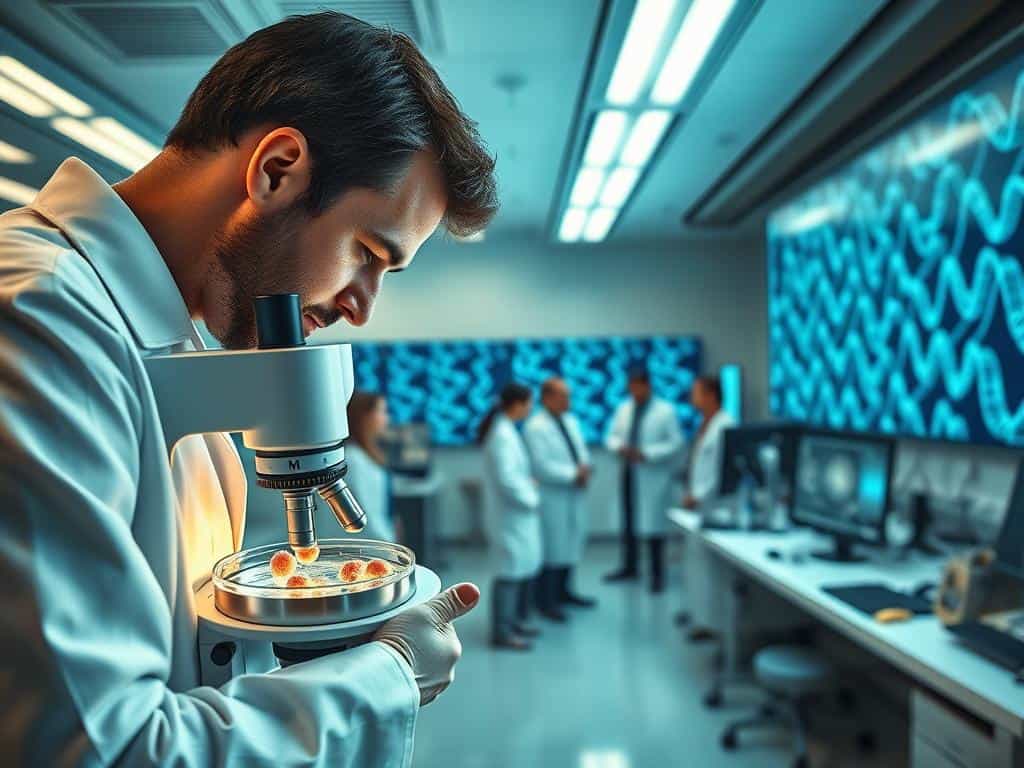
Imagine being in a lab with advanced tech, where scientists are exploring life’s secrets. Just a few decades ago, cloning humans seemed like science fiction. Now, genetics and bioengineering are making it possible.
I watched a documentary on pioneers like Steen Willadsen and John Gurdon. Their work sparked debates on cloning’s morality. It made me think about cloning’s impact on our identity and ethics.
In this article, we’ll dive into cloning’s science and its ethical challenges. This will help us understand its implications.
Key Takeaways
- Human cloning is being studied through sophisticated genetic techniques.
- Ethical concerns include identity issues and the morality of cloning.
- The field has seen contributions from notable figures like Steen Willadsen and John Gurdon.
- More than 2,000 human diseases have genetic underpinnings.
- Current cloning research faces numerous ethical and regulatory challenges.
The Science Behind Human Cloning
Human cloning uses advanced biotechnology to create life. It starts with somatic cell nuclear transfer (SCNT), a key method. This process moves a nucleus from a body cell into an egg without a nucleus.
This method can make embryos that could grow into babies. But, making these embryos work is hard. Many attempts fail, showing the challenges of cloning.
Understanding Somatic Cell Nuclear Transfer (SCNT)
SCNT is key in cloning, using DNA from adult cells. Clones made this way have the same DNA as the donor. This includes both the nucleus and mitochondria.
The process is complex, needing careful steps to keep cells alive. It has worked in mammals, but making many clones is hard. This is because of the need for many eggs and surrogate mothers.
Current Cloning Techniques and Their Applications
Cloning is not just for making copies of people. It’s used in farming to improve animal traits. For example, to make animals grow faster or produce more milk.
It also helps in saving endangered species. This could bring back extinct animals. Plus, it’s being used to make new tissues for medicine. This could change how we treat diseases.
Human Cloning: Controversies and Ethical Concerns
Human cloning brings up big ethical questions. It affects our minds and society. People worry about the mental health of clones and their sense of self. They fear clones might be seen as copies, not unique individuals.
Psychological and Social Risks
Reproductive cloning worries many because it often fails and can harm embryos. This worries both the clones and society. It makes us question how clones see themselves and how society views them.
Proposed laws on cloning also raise big questions. For example, testing every baby for cloning could be seen as a privacy issue. The public’s strong reaction to embryo research shows how much we value human life.
The Debate Over Therapeutic Cloning
Therapeutic cloning sparks a big debate. Some see it as a chance to help people, while others think it’s wrong. They worry about the ethics of using embryos for research.
Countries like Germany, France, and Japan have banned cloning. They follow the United Nations’ guidelines to protect human dignity. This shows a global concern for ethics in science.
The debate on cloning is not just about clones. It touches on bigger issues like eugenics and creating ‘better’ humans. It highlights the need for careful ethics in science to protect human dignity.
Legal Framework Surrounding Human Cloning
The laws on human cloning in the U.S. are complex and not the same everywhere. Many states have their own rules, but there’s no single federal law banning it. This makes it hard for scientists to work, as they face many rules and limits on funding.
The Dickey-Wicker amendment is a big deal. It stops federal money from going to research on embryos. This affects how cloning technology is developed and used.
U.S. Legislation and State Regulations
States have different rules on cloning. Some ban it, while others allow research under certain rules. The FDA and NIH play a big role by overseeing and setting standards for cloning research.
But, without a single national law, cloning is treated differently in each state. This creates confusion and challenges for scientists.
Worldwide, about 70 countries have banned human cloning. This is because of concerns about human dignity. Groups like UNESCO and WHO say reproductive cloning is wrong. They think we need strong laws to protect human values.
As science moves forward, we need to keep talking about cloning’s benefits and risks. Finding a balance between progress and ethics is a big challenge for everyone involved.
Conclusion
The future of human cloning is uncertain, with fast progress in biotechnology and big ethical questions. Past successes like Dolly the sheep and CC the cat show both the promise and dangers of cloning. A ban on human reproductive cloning is supported by experts, due to animal cloning’s risks.
Thinking about cloning’s ethics shows we need to talk more. Cloning could help with genetic diseases or organ transplants. But, it raises big questions about who we are and our unique lives. We must improve cloning methods and keep up with science to move forward safely.
My thoughts on cloning aim to keep the discussion going. We need smart policies that balance science and ethics. As we explore cloning, we must stay careful, using science and ethics to respect human dignity and innovation.
