AI Can Create Art Now—But Is It Really Creative?
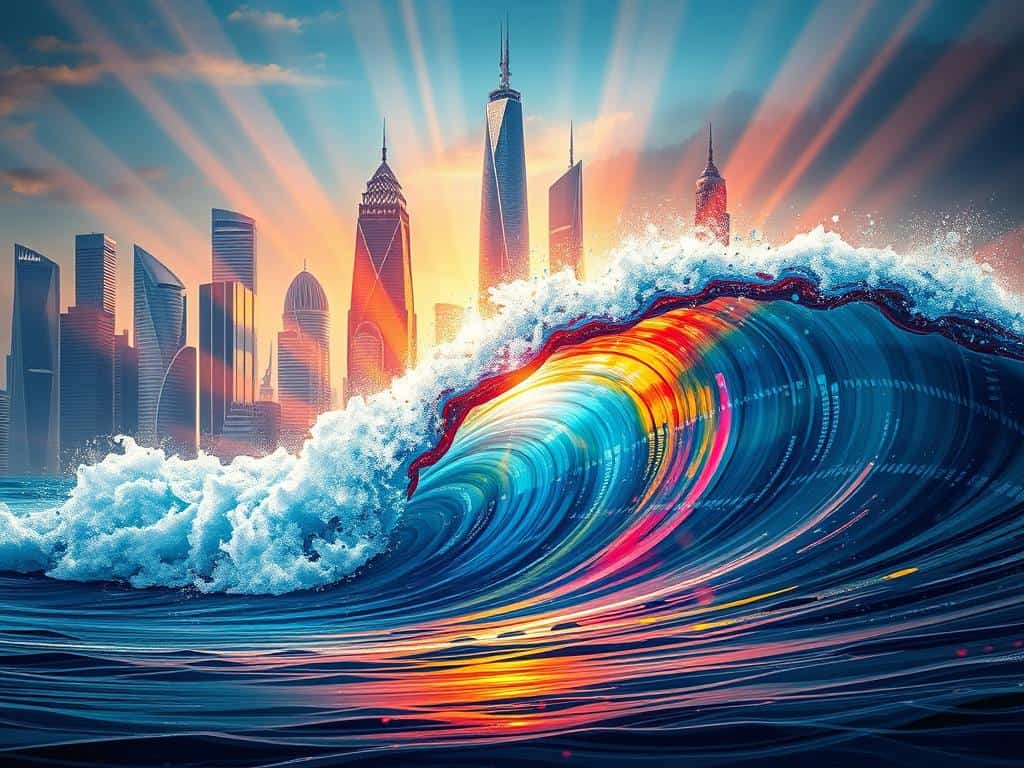
In a New York City gallery, I saw a portrait called “Edmond de Belamy.” It was made by an AI and sold for $432,500 at Christie’s. This was way more than the $10,000 people thought it would go for. It made me think a lot about technology and art.
Tools like DALL-E 2 and the Ai-Da Robot Project are changing how we see art. I wondered if we’re seeing a real AI Art Revolution or just a copy of human art. The art world is full of different opinions. Some artists see AI as a partner, while others think it’s a threat.
This debate makes us think about how machine learning changes art. It’s a big topic in the art world.
Key Takeaways
- The artwork “Edmond de Belamy” sold for $432,500, sparking debates about AI in art.
- Generative adversarial networks (GANs) were a turning point in AI art technology.
- DALL-E Mini’s viral success in 2022 highlighted rising interest in AI-generated art.
- AI artists like Botto engage communities by allowing them to vote on weekly creations.
- The Ai-Da Robot Project explores the boundaries of creativity through humanoid art.
- As AI art grows, so do discussions about copyright and ethical considerations.
- AI-generated visuals often rely on extensive datasets of historical artistic styles.
The Emergence of AI Art and Technology
Art has changed a lot with AI art tools. These tools let artists try new things with machine learning and algorithms. They help make unique art and improve existing pieces. This makes art more open to everyone, no matter their skill level.
The Rise of AI Art Tools
AI art tools are getting more popular. Sites like OpenAI’s DALL-E and Midjourney are at the forefront. Between 2017 and 2019, shows with AI art went up by 220%. Christie’s even sold an AI painting for $432,500 in 2018.
This showed that AI is now accepted in the art world. It opened the door for more people to see the value in AI art.
How AI Art Is Created
Making AI art uses machine learning, mainly through generative adversarial networks. These networks have two parts: one makes images and the other checks them. This creates a cycle that makes great art.
Artists use these tools to make new, innovative pieces. The interest in AI art is growing fast. It’s expected to go from $200 million to $5 billion by 2032. This shows how digital art is becoming more accepted.
AI Art Revolution: Collaboration or Threat?
The rise of AI in art has sparked interesting questions. Many see AI as a partner that boosts creativity, not just a replacement. Tools like Midjourney and DALL-E make creating images easy, using just text. This mix of human touch and AI’s power is changing art-making.
AI as Artistic Collaborator
Many artists are using AI in their work. This blend of old and new ways of creating art is creating something new. Tools like Splice help with music, making it easier to make new songs.
There’s a growing need for roles like AI Art Directors and Prompt Engineers. Artists who use AI well are in high demand. They know how to use AI to make their art better.
Ethical and Economic Concerns
AI-generated art brings up big ethical questions. There’s worry about who owns the art and who gets credit. The fear of job displacement is real, as AI art could be cheaper and more common.
This could hurt the value of art made by humans. Talking openly about AI’s role can help build trust. It shows how technology fits into the art-making process.
Conclusion
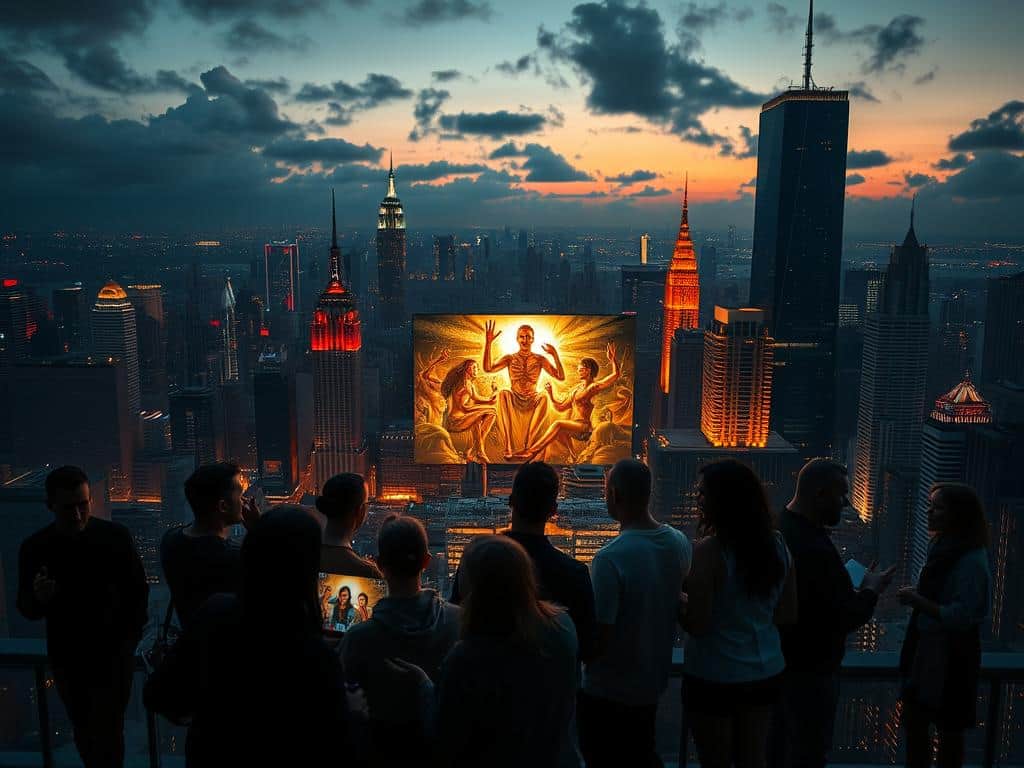
The world of AI art is both exciting and complex. It has changed how we see original art. A recent ruling showed that AI art doesn’t have a human creator, making us question what’s original.
Tools like Midjourney and Dall-E 2 show AI’s power in making designs fast. Some say AI art lacks emotion, but others see it as a new way to tell stories. The future of AI art is full of possibilities, but it’s hard to predict.
The future of AI art looks promising, despite worries about losing human artists. Using AI could lead to new ways of creating, making art more diverse. As we move forward, we need to keep talking about how humans and machines can work together in art.
