Why Co-Working Spaces Are the Future of Work!
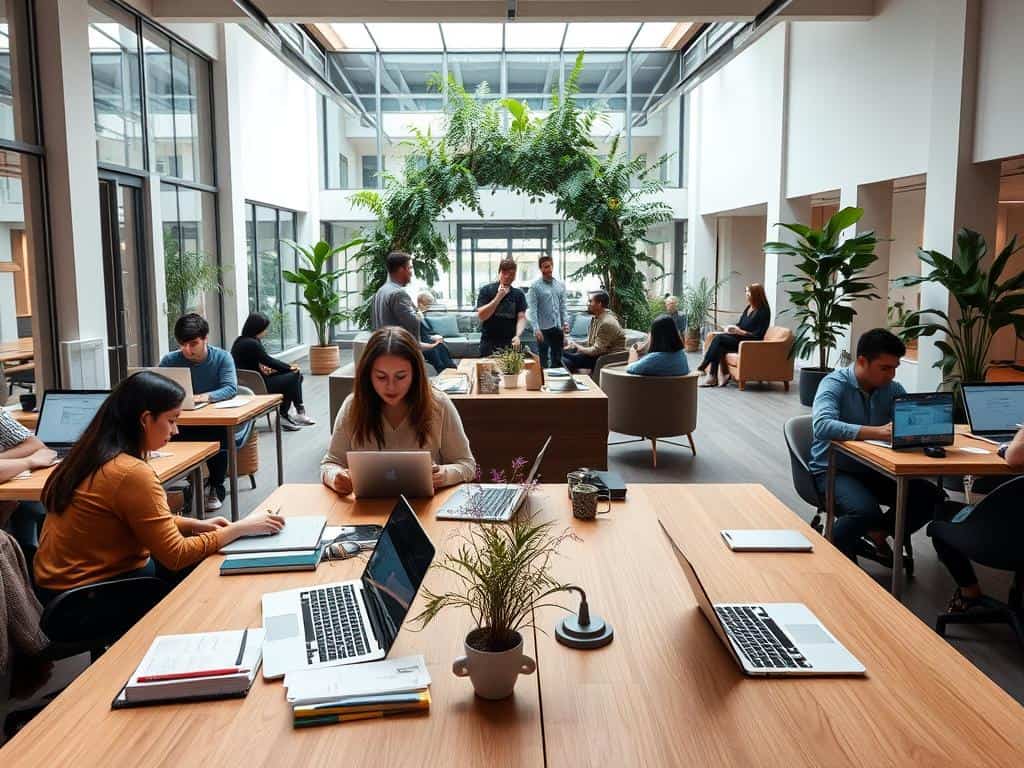
As I sat at my favorite coffee shop, I noticed the buzz around me. Freelancers were excitedly talking about their projects. An entrepreneur was having a meeting nearby. It hit me: work is changing.
With 25-30% of the US workforce working remotely, many are looking for better workspaces. Co-working spaces offer collaboration, productivity, and flexibility. They’re leading the way into the future of work.
By 2024, nearly 42,000 co-working spaces will exist globally. This shows why professionals are leaving their home offices for shared spaces. These places are more than desks and rooms; they’re a sign of a changing workforce.
My journey as a freelancer shows the power of these spaces. I found a community that fits my lifestyle perfectly. In this article, we’ll see how these spaces are changing work and why they’re important for today’s professionals.
Key Takeaways
- Co-working spaces cater to the growing demand for flexibility in the future of work.
- They offer significant cost savings compared to traditional office rentals.
- Many spaces provide amenities that enhance productivity and well-being.
- Co-working environments foster a sense of community among freelancers.
- These spaces support diverse working styles and collaboration opportunities.
- Adopting co-working can help combat feelings of isolation prevalent in remote work.
The Rise of Co-Working Spaces
The way we work is changing, thanks to the coworking evolution. This change reflects the new workforce dynamics after the pandemic. Now, more companies are moving towards flexible work setups, and coworking spaces are becoming key solutions.
With fewer remote workers, there’s a focus on spaces that foster innovation and community. This shows how important it is for businesses to have a unified environment while also being flexible.
Changing Workforce Dynamics
One big change is the rise of serviced private offices, up 18% in 2023. A McKinsey study found that 73% of American workers spend at least three days a week in the office. This highlights the appeal of the hybrid model.
Coworking spaces are vital for companies growing, like those with five to ten employees in the same city. They offer a place for freelancers and big companies alike, not just a desk but a community to thrive in.
Increasing Demand for Flexibility
The need for flexibility is clear, with coworking spaces growing by nearly 700% from 2011. Companies see the value in flexible work setups for better employee satisfaction and productivity.
Coworking spaces offer smart technologies and custom membership plans to meet different needs. The average coworking member is 39, showing a mix of experience and new ideas driving these spaces.
The Benefits of Co-Working Spaces for Businesses
Co-working spaces offer many benefits that can boost business performance. They have flexible leasing options that attract different types of companies. This flexibility helps businesses adapt quickly to market changes.
It allows them to use resources better and stay agile. This is key for keeping operations smooth.
Flexible Leasing Options
One big advantage of co-working spaces is the flexible leasing options. Unlike traditional leases, co-working spaces offer month-to-month deals. This lets businesses grow or shrink as needed.
Shared amenities help cut costs, providing business solutions that are more affordable. Services like reception, internet, and break rooms are included. This makes monthly costs easier to manage.
Boosting Productivity and Happiness
Co-working spaces foster a collaborative environment that boosts productivity. Studies show that 84% of coworkers feel motivated and engaged. Also, 68% say they focus better in these spaces.
People working here often finish tasks faster. In fact, 64% of members complete projects on time. Activities like yoga and meditation are common, improving cognitive skills and well-being.
This community-focused culture leads to more happiness and innovation. It’s no surprise that 70% of members say their health has improved.
Best Co-Working Spaces for Collaboration
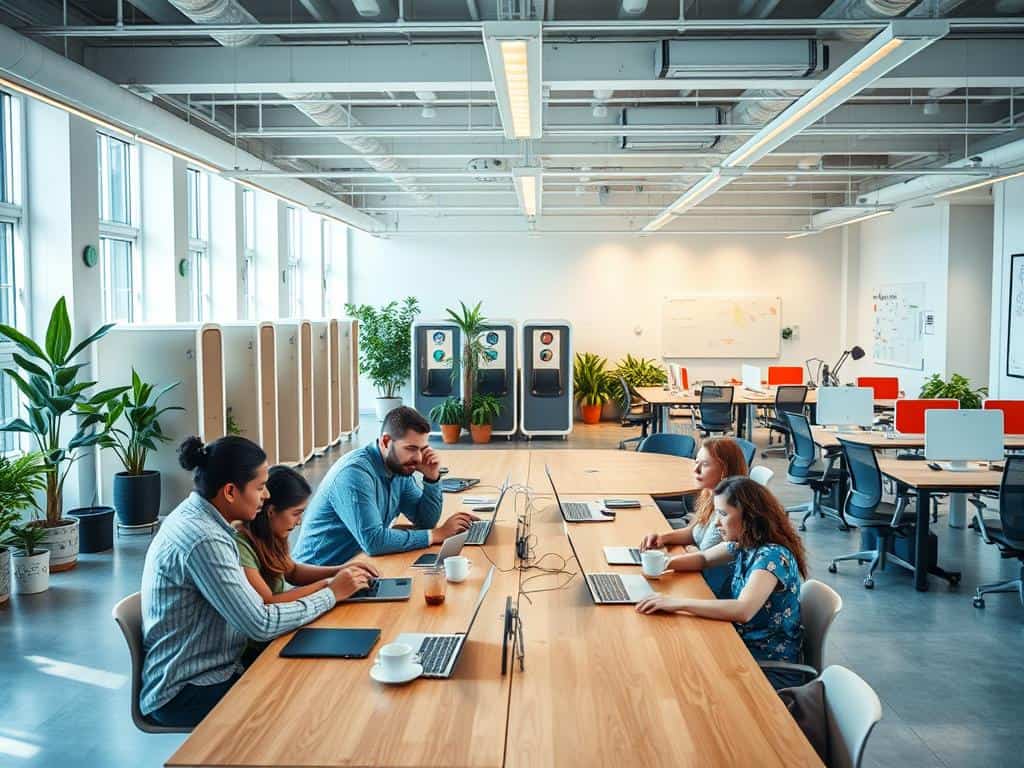
In today’s fast-paced work world, the best coworking spaces do more than just offer a desk. They help build community through activities and services. This creates a space where people from different backgrounds can meet, share ideas, and find new partnerships.
Fostering Community and Networking
Top coworking spaces are centers for networking. They host events, workshops, and social events to bring people together. For example, The Farm offers daily access from $29 to $50+, and NeueHouse has individual memberships starting at $3,600 a year. This shows their dedication to building a lively community.
The Great Room in Singapore offers dedicated offices for SGD 1,500 and hot desks for SGD 750. This encourages professionals to connect and innovate. At The Commons in Australia, flexible desk options and private offices are designed to boost collaboration. This attracts a wide range of talents, creating a strong network for innovative projects.
Spaces like Betahaus in Barcelona, with day passes for EUR 17, show how affordable access can build a strong community. These environments push people to work together, fostering a sense of belonging. My experiences show that working together enriches personal growth and business success.
Conclusion
Looking at the future of coworking, it’s clear that work environments are changing. Coworking spaces are now key in this shift, meeting the need for flexible work options. They offer fast internet, meeting rooms, and a community vibe, helping people focus and work better.
These spaces also help people meet and share ideas, leading to new collaborations. This community feeling helps fight loneliness and boosts mental health. It’s a big plus in our remote work world, where isolation can be a big issue.
In the end, coworking spaces will shape our work lives in big ways. They’ll adapt to new tech and health needs, leading the work environment change. With their mix of flexibility and community, I see a future where people work together better and achieve more.
