Are You a Night Owl or Early Bird? Work Smarter!
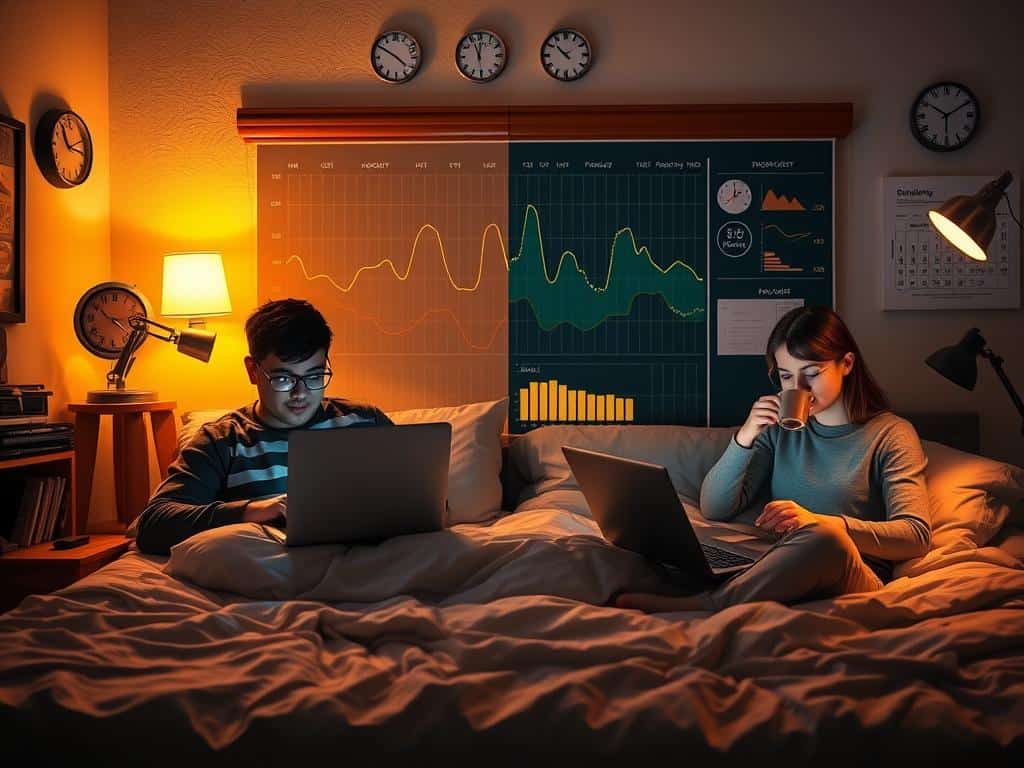
One morning, while sipping my coffee, I overheard colleagues debating their productivity patterns. Some were early birds, tackling tasks before dawn. Others were night owls, finding their spark late at night. It made me realize: sleep patterns affect our creativity and work efficiency.
A 2021 study showed early birds have better social support and mindfulness. But, night owls might face health risks. I wondered how knowing our sleep types could help us work smarter. Let’s explore the science behind sleep patterns and how they shape our daily routines.
Key Takeaways
- Early birds often exhibit traits like agreeableness and conscientiousness.
- Night owls are associated with higher risks of health issues like type 2 diabetes and obesity.
- Most adults fall somewhere between early and late chronotypes, with many being ‘bears’.
- Social jetlag can lead to chronic tiredness impacting productivity.
- Your chronotype may change throughout your life, influenced by age and lifestyle.
Understanding Sleep Chronotypes
Learning about sleep chronotypes helps us understand our sleep patterns and how productive we are. Many of us are either morning larks or evening types. These types show when we’re most awake and full of energy. They are linked to our genes and the world around us.
What are Sleep Chronotypes?
Sleep chronotypes are our natural sleep and wake cycles. There are four main types: bears, lions, wolves, and dolphins. About 55% of people are bears, with a mid-day productivity peak.
Lions, making up 15%, wake up early and are most productive before noon. Wolves, also 15%, are more alert in the afternoon and evening. Dolphins, 10% of the population, have unusual sleep patterns and are alert late in the morning.
The Science Behind Chronotypes
The study of chronotypes is based on genetics, mainly the PER3 gene. Our sleep patterns change from childhood to adulthood and later in life. Each type has its own best work hours, affecting how well we think.
Bears are most productive from 10 a.m. to 2 p.m. Lions, waking up early, are effective before noon. Wolves do their best from 10 a.m. to 4 p.m., sleeping in. Dolphins, despite their sleep issues, are also most productive in the morning.
Productivity Cycles: Working According to Your Chronotype
Knowing how our natural sleep patterns affect our work can boost our performance. By figuring out if we’re early birds or night owls, we can plan our tasks better. This way, we do our best work and feel better overall.
Maximizing Morning Productivity as an Early Bird
Early birds have a great chance to tackle tough tasks in the morning. Doing important work first takes advantage of our peak energy and focus. Starting the day with purpose, by prioritizing and setting goals, helps avoid procrastination.
It leads to better performance and creativity. This is because we’re more focused and productive in the morning.
Evening Work Strategies for Night Owls
Night owls work best late at night, when they’re most alert. They can plan their tasks for the evening to be more productive. Night owls should focus on creating a distraction-free work space for these hours.
This helps them work more efficiently and reduces stress from not fitting into the day’s schedule.

Conclusion
Discovering my sleep chronotype has changed how I work. It’s shown me how important it is to match my work with my natural rhythm. Early risers do best in the morning, while night owls shine at night.
This knowledge helps me work better and stay focused. It makes my daily tasks more efficient.
A study of 23 people showed how our sleep affects our work and happiness. It found that our internal clocks play a big role in our productivity and well-being. By adjusting our work hours to fit our sleep patterns, we can do better at work and feel better overall.
Good sleep habits are key to a balanced life. They help us manage our work and personal life better. This leads to a happier and more productive life.
Knowing about sleep chronotypes is not just about being more productive. It’s also about living a healthier life. Ignoring our natural sleep times can harm our mental health, more so for evening people.
By listening to our body’s natural rhythms, we can live a healthier, happier life. This knowledge is a long-term investment in our well-being.
