How Night Owls Can Maximize Their Productivity!

As a night owl, I’ve found joy in working late into the night. The quiet of the night sparks my creativity. Once, after a long day, I worked from 10 PM with a cup of coffee. Ideas flowed freely, and I created more content in three hours than all day.
This experience showed me the value of working when I’m most alert. It’s a challenge in a society that favors mornings. But with the right approach, night owls can thrive.
Let’s dive into tips for night owls to make the most of their late-night hours. We’ll look at creating the perfect work environment and flexible schedules. These strategies can turn your unique rhythm into a strength.
Key Takeaways
- Understanding your natural energy levels is essential for maximizing productivity.
- Flexible work schedules can greatly benefit night owls and prevent burnout.
- Designated quiet spaces enhance focus and rejuvenation.
- Optimal work hours for night owls typically fall between 8 PM and 3 AM.
- Telecommuting options can significantly boost a night owl’s productivity.
- Adjustable lighting can aid in maintaining alertness and encourage work efficiency.
Understanding Night Owl Productivity
Night owls have special sleep and work patterns. They do their best work late at night. About 30% of people are night owls, preferring to work when they’re most awake.
Genetics also play a big part. Research shows that their natural body clock, or chronotype, is often set by their genes. This makes it hard for them to wake up early.
What Defines a Night Owl?
Night owls stay up late and are most productive after dark. They can focus better and avoid distractions at night. A survey found that 80% of night owls feel more productive from 8 PM to midnight.
Instead of trying to be morning people, night owls can do well by following their natural rhythm. This can lead to better results.
The Science Behind Nighttime Energy
The body’s natural rhythm affects how well we work. Night owls produce melatonin later, making it hard to wake up early. This can lead to stress and lower job satisfaction.
Working when they’re naturally most alert can boost productivity by 20-30%. Ignoring their natural energy can cause burnout and decision fatigue.
Maximizing Productivity as a Night Owl
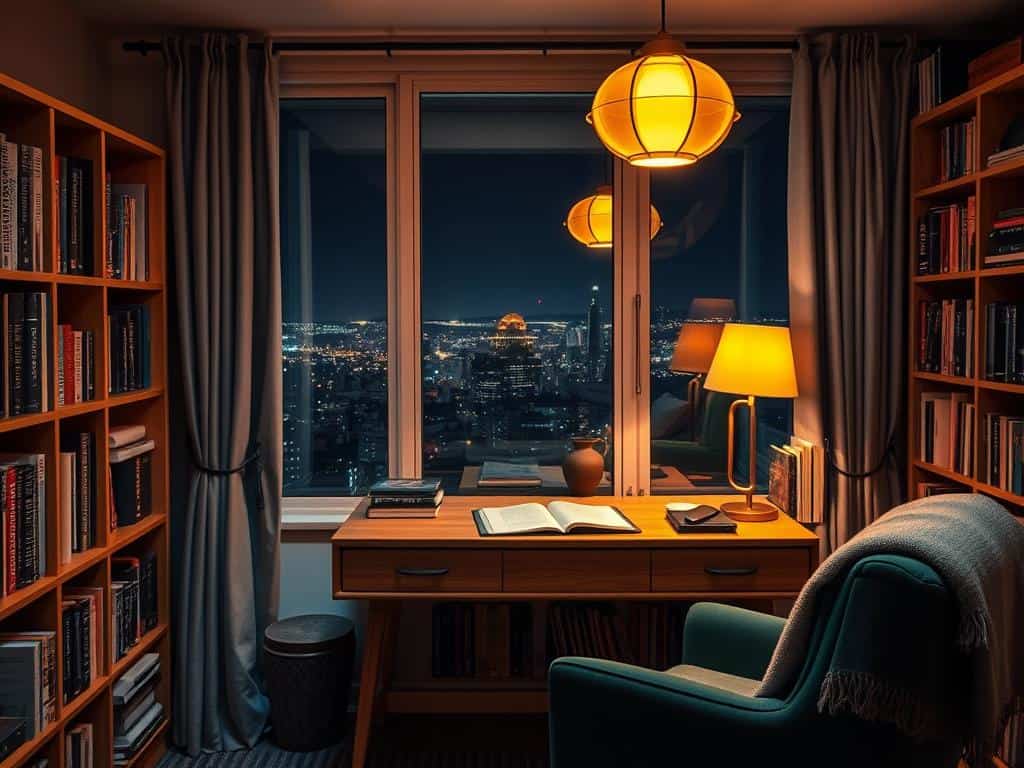
To boost my productivity as a night owl, I need to set up a work space that fits my late-night work style. I focus on creating an environment that helps me stay sharp and energized. Even small changes can make a big difference in how productive I am at night.
Creating an Ideal Work Environment
Starting with the right lighting is key. Research shows that good lighting can make us up to 40% more alert. I use bright, adjustable lights that mimic daylight to stay focused. Also, controlling noise is important; I use noise-cancelling headphones to block out distractions.
Having the right furniture is also critical for comfort during long work hours. I choose a good chair and desk to avoid getting tired. By combining these elements, I create a space that helps me work better at night.
Leveraging Peak Hours for Efficiency
Finding my peak hours is essential. Studies say night owls are most alert between 10 PM and 2 AM. I do my hardest tasks during this time to take advantage of my natural energy. I also use the Pomodoro Technique to stay focused and keep my energy up.
Using tools like ClickUp helps me organize my tasks and deadlines. This way, I can focus on what’s important without feeling overwhelmed. By setting up a great work environment and managing my time well, I can reach my goals while enjoying the quiet of the night.
Strategies to Overcome Challenges for Night Owls
As a night owl, I face special challenges that affect my health and work. The challenges night owls face include sleep problems, health issues, and society’s bias towards early risers. Keeping a regular sleep schedule is key to overcoming these hurdles. It helps me sleep better and feel more energetic during the day.
Maintaining a Healthy Sleep Schedule
To develop healthy sleep habits for night owls, I stick to a consistent sleep and wake-up time. This helps my body adjust to its natural cycle. A calming bedtime routine also helps me relax and get ready for sleep.
My lifestyle choices, like diet and exercise, play a big role too. Regular exercise boosts sleep and health. Drinking enough water is also important for my brain function. Eating smaller meals at night helps avoid sleep disruptions.
It’s also vital to balance work and personal life for a good work-life balance for night owls. I look for jobs that offer flexible hours or remote work. This lets me do my best work when I’m most alert. Slowly changing my routine helps reduce stress and keeps me on track.
By tackling these challenges head-on, I can improve my sleep and enjoy my life as a night owl.
Conclusion
Being a night owl has brought many benefits I didn’t see coming. I’ve learned to work better by following my natural rhythms. This way, I can do my best work when it’s quiet and I’m most alert.
It’s key to get enough sleep and have a good work space. This helps me avoid feeling tired or disconnected during the day. Doing my best work when I’m most awake makes a big difference.
In a world that likes early risers, it’s important to celebrate night owls. Being a night owl lets me tap into my creativity and focus. It’s turned what seemed like a problem into a big advantage, helping me succeed in a society that often favors the early birds.
