The Eisenhower Matrix: Prioritize Like a CEO!
Imagine waking up on a Monday, coffee in hand, ready to tackle the week ahead. As I glanced at my to-do list, a familiar wave of overwhelm washed over me. Bills to pay, meetings to attend, reports due—the chaos of competing priorities felt insurmountable.
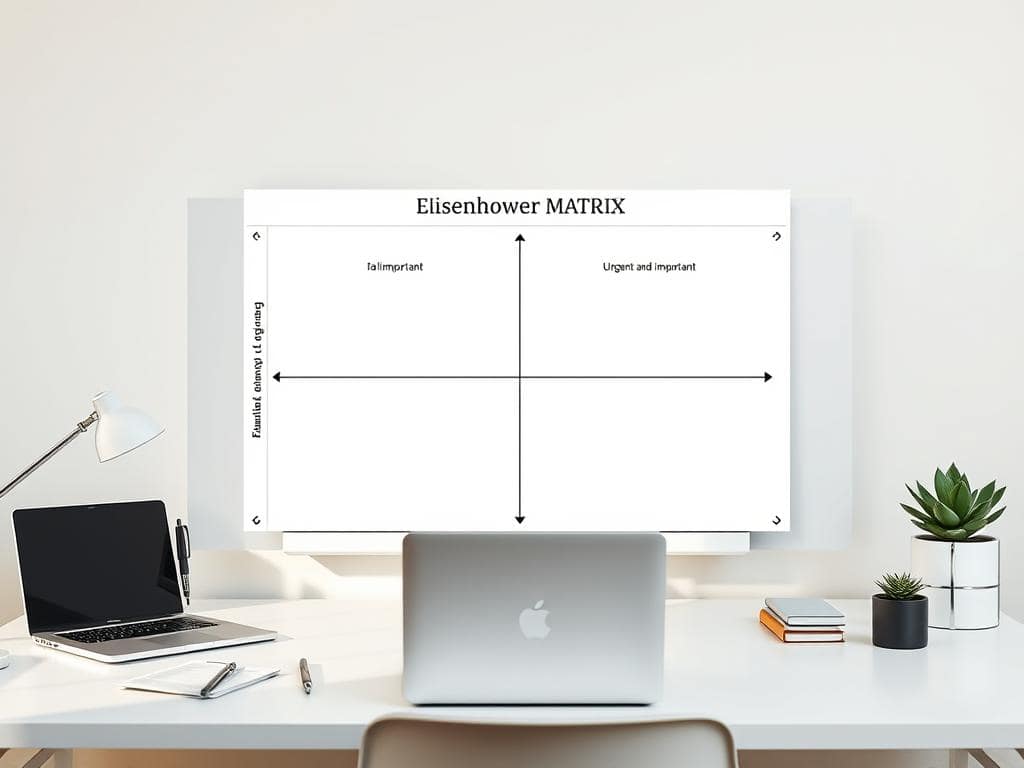
It was then that I remembered a powerful tool used by some of the world’s most effective leaders: the Eisenhower Matrix. This strategic framework doesn’t just help in task prioritization; it transforms how we approach decision making. It clearly distinguishes between what is urgent vs. important.
Inspired by President Dwight D. Eisenhower’s philosophy, this matrix categorizes tasks into four quadrants. It helps me to hone in on what truly matters. It’s a game-changer for productivity, allowing room to breathe and focus on long-term goals.
Key Takeaways
- The Eisenhower Matrix categorizes tasks into four quadrants for clearer task prioritization.
- Regular usage can significantly reduce busywork and enhance productivity.
- Focusing on top priorities can lead to improved results and impact.
- Framework aids in better delegation and teamwork efficiency.
- Limiting tasks in each quadrant helps eliminate clutter and promotes effective management.
- Engaging in leisure activities supports overall productivity and performance.
The Origin of Task Prioritization with the Eisenhower Matrix
The Eisenhower Matrix is a key tool for task prioritization. It uses a 2×2 grid to sort tasks into four areas. These areas are based on how urgent and important each task is.
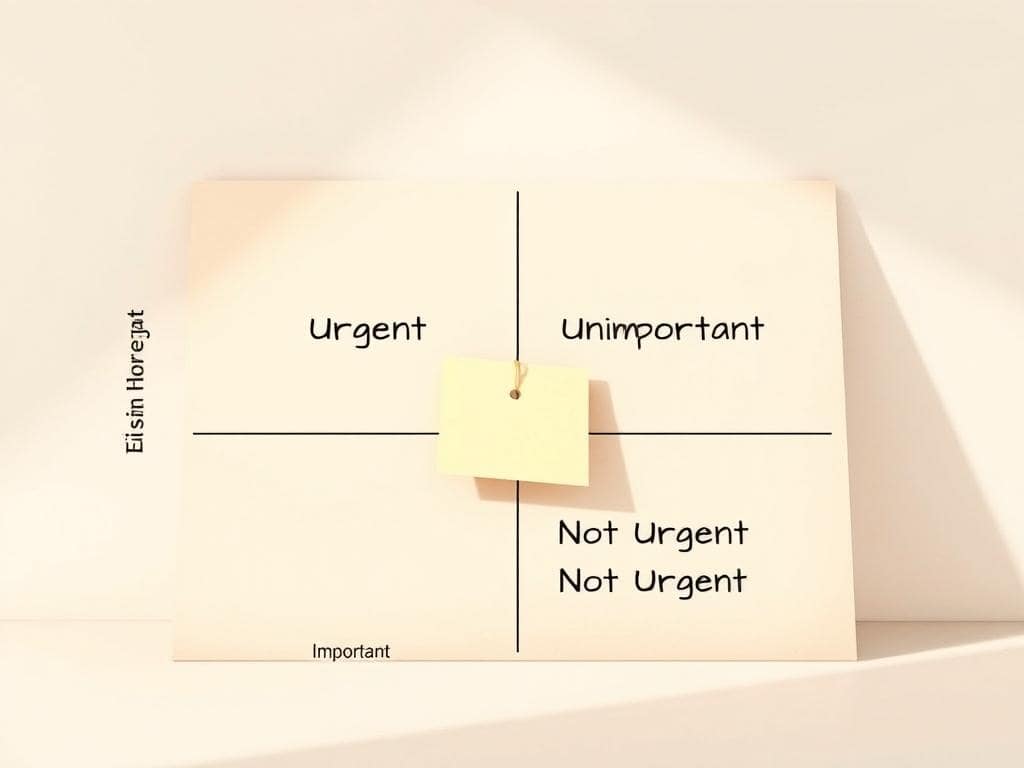
By sorting tasks into Urgent & Important, Important but Not Urgent, Urgent but Not Important, and Neither Urgent nor Important, I can better manage my work. This helps me handle my daily tasks more effectively.
Understanding the Concept
The Eisenhower Matrix helps me tell urgent from important tasks. Sometimes, I get caught up in tasks that need quick action. This can distract me from my long-term goals.
This tool helps me see what’s truly important. Tasks in Quadrant II, or Important but Not Urgent, are key to my future success. Yet, they often get overlooked.
The Philosophy Behind the Matrix
The matrix’s philosophy is simple: “What is important is seldom urgent, and what is urgent is seldom important.” This idea changes how I view productivity.
By focusing on urgent tasks over important ones, I miss out on big opportunities. This philosophy helps me focus on planning and growth. It ensures my daily tasks align with my long-term goals.
How to Utilize the Eisenhower Matrix for Effective Task Prioritization
The Eisenhower Matrix is a great tool for better task prioritization and making decisions. It helps me sort tasks by urgency and importance. This way, I can handle my work better and avoid feeling overwhelmed.
Step-by-Step Guide to Implementing the Matrix
First, I make a detailed list of all tasks, called a “brain dump.” This helps me see everything clearly and make sure I don’t miss anything. Then, I use planners or templates to sort tasks into the Eisenhower Matrix’s four quadrants.
I start with tasks that are both urgent and important. These need my immediate focus because they’re critical. Tasks that are important but not urgent get scheduled to keep moving toward my goals. Tasks that are urgent but not important are delegated to save time.
Tasks that are neither urgent nor important are either eliminated or postponed. This frees up time for what’s truly important.
Handling Each Quadrant
After sorting tasks, I focus on the urgent and important ones first. These are often related to work or personal emergencies. Tasks that are important but not urgent get a specific time slot to avoid being forgotten.
Tasks that are urgent but not important are often due to outside pressure. I try to delegate these to focus on my main goals. The quadrant for tasks that are neither urgent nor important reminds me to stay focused on what’s truly important.
It’s important to regularly check my matrix. Priorities can change, and what’s not urgent today might be tomorrow. Managing tasks this way helps me avoid last-minute stress and boosts my productivity.
Conclusion
Using the Eisenhower Matrix changes how I handle my daily tasks. It helps me see what’s urgent and what’s important. This makes deciding what to do easier.
It organizes tasks into four areas. This way, I focus on what’s most important for my goals. It’s not just about doing tasks as they come up.
The Matrix makes me think ahead. I focus on the most critical tasks first. Then, I make time for activities that help me grow in the future.
This method makes my work flow better and reduces stress. It helps me stay productive and balanced. By focusing on key tasks today, I set myself up for success tomorrow.
