How to Stop Procrastinating in 5 Simple Steps!
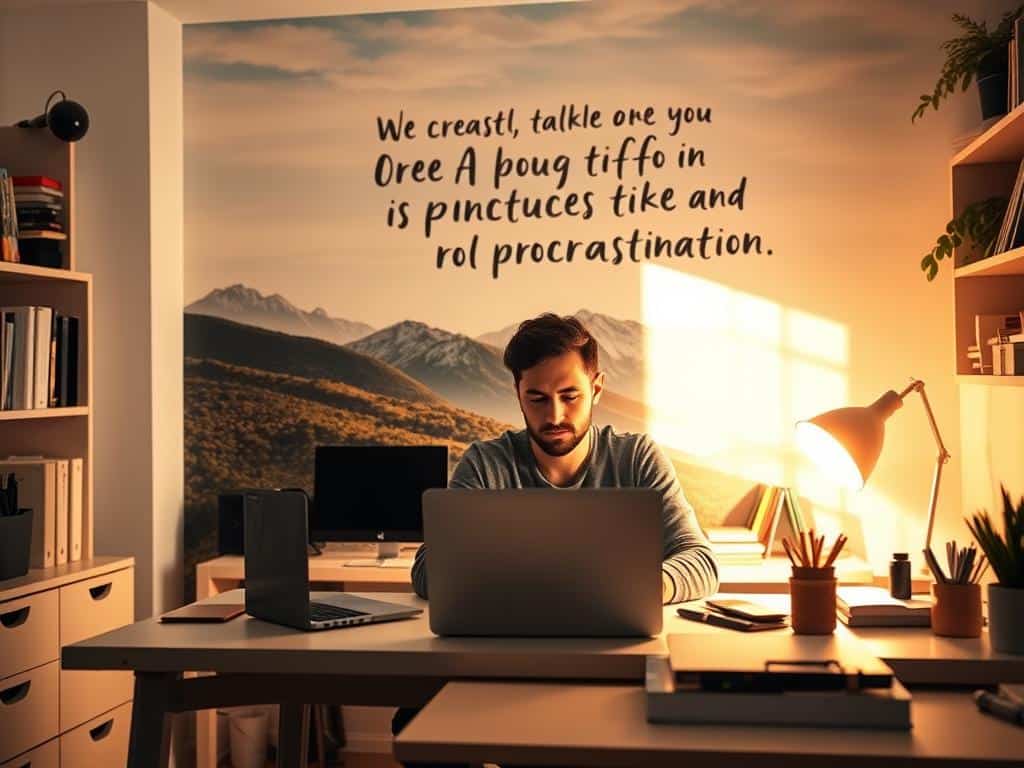
Every morning, I sit at my desk, looking at a growing pile of tasks. I’ve been here before, telling myself, “I’ll start in just five more minutes.” But time keeps slipping away. With a cup of coffee, I think about emails and important projects.
But distractions like social media and TV are hard to resist. Even organizing my desk seems more fun than the work I need to do.
Procrastination is a common problem, often caused by negative feelings. Tackling big emotional tasks can make us delay for days, weeks, or even years. I remember Dean Bokari’s words, reminding me that when faced with too many choices, we might avoid them.
So, how do we break this cycle and take control? This article will give you a simple fix for procrastination. We’ll explore five steps to boost your productivity, discipline, and motivation. Let’s change those bad habits into actions that matter.
Key Takeaways
- Procrastination often stems from negative emotions overshadowing positive ones.
- Emotional tasks frequently lead to delays that can last for years.
- Deadlines significantly influence productivity, according to Parkinson’s Law.
- Breaking tasks into smaller steps can increase completion rates by 40%.
- Individuals who practice self-compassion are 50% less likely to procrastinate.
Understanding Procrastination and Its Effects
Procrastination can block personal and professional goals. It’s delaying important tasks for fun ones. This leads to anxiety and lower work performance.
About 70% of college students see procrastination as a big problem. Around 20% of adults say they’re chronic procrastinators. Knowing about procrastination can help us stop it.
What is Procrastination?
Procrastination means putting off tasks that are important but not fun. I often choose easy tasks over hard ones. This makes me stressed and anxious.
As I procrastinate more, I feel worse about myself. My sense of worth and ability to do things also goes down.
Why Do We Procrastinate?
Procrastination comes from deep feelings about tasks. I might avoid tasks that make me uncomfortable or feel too hard. Fear of failing makes it even harder to start.
Studies show 40% of students fear failure. This fear makes procrastination worse.
The Cycle of Procrastination
The cycle of procrastination is hard to break. It starts with discomfort and leads to avoiding tasks. I might do less important things instead, causing panic when deadlines are near.
This cycle makes me feel anxious and lowers my work performance. It keeps the cycle going unless I take action to stop it.

Procrastination Fix: 5 Simple Steps to Action
Beating procrastination means using good time management and focus strategies. I’ve learned that taking action in small steps can change how I do daily tasks. Here are five easy steps to fight procrastination.
Plan Your Days in Advance
Planning my day helps me know what to do. By setting time for each task, I avoid feeling too much stress. Studies show that working in 25-50 minute blocks boosts my focus and work quality.
Planning ahead helps me manage time better and focus on important tasks.
Set Clear Priorities
Knowing what’s most important is key. Tim Ferriss suggests focusing on one big task for 2-3 hours a day. This way, I can focus on what really matters without getting distracted.
When I know my top priorities, I can ignore less important things and work on what’s truly important.
Reduce Distractions
Less distraction means more focus. I turn off unnecessary programs and websites when I work. Cutting down on interruptions has really helped my work quality.
With fewer distractions, I can get into a flow state where I’m much more productive.
Utilize the Next Action Method
Breaking big tasks into smaller ones makes them feel doable. Studies say this can make me up to 50% more productive. The Next Action Method helps me deal with big projects one step at a time.
This way, what seems huge becomes something I can handle.
Form Consistent Habits
Good habits make me more productive. Using the Pomodoro Technique, which involves focused work, has made me up to 25% more efficient. I also take short breaks after 90-120 minutes.
Conclusion
Beating procrastination is doable with the right mindset and steps. I’ve learned that planning my day helps a lot. By making a to-do list and setting priorities, my productivity has soared.
Using the Next Action Method has given me a sense of progress. It breaks tasks into smaller parts. I also avoid distractions by turning off my phone. Sometimes, stepping away from work leads to new ideas.
Every small step counts towards my big goals. The path to being more productive is full of ups and downs. But each day, I get better at overcoming procrastination and moving towards success.
