How to Soundproof Your Home on a Budget!

Once, I was watching my favorite TV show when construction noise from next door ruined it. The sound of jackhammers and drills made my evening unbearable. I realized soundproofing was key to my sanity and comfort.
I didn’t want to spend a lot of money on it. But, I found ways to soundproof my home without breaking the bank. In this article, I’ll share those budget-friendly methods with you. You’ll learn how to reduce noise without spending a lot.
Creating a quiet home is very important. We face many noise disturbances every day. So, let’s explore some affordable and effective soundproofing strategies!
Key Takeaways
- Understanding soundproofing is essential for a peaceful home environment.
- Effective methods can significantly reduce noise without expensive renovations.
- Strategic placement of soundproofing materials enhances overall effectiveness.
- Natural elements like heavy curtains can aid in sound reduction.
- DIY solutions can be both economical and effective.
Understanding the Importance of Home Soundproofing
Home soundproofing is more than just making your home comfortable. It’s about keeping your health safe from noise pollution. Living in a noisy area can harm your well-being. That’s why soundproofing is so important for a peaceful life.
Why Soundproofing Matters
Noise in our homes can really affect us. Homes with soundproofing sell for 5-10% more. This shows how much people value a quiet home. Plus, soundproofing can save up to 20% on energy costs.
Health Effects of Noise Pollution
Many of us face health problems from noise pollution. It can disrupt sleep, cause stress, and even raise blood pressure. Soundproofing helps create a calm space. It’s a smart choice for a healthier home.
Budget-Friendly Soundproofing Techniques for Your Home
There are many ways to make your home quieter without spending a lot. You can block noise by fixing gaps, making your own soundproofing, and using soft items. These steps help you enjoy a quieter space without spending too much.
Sealing Gaps and Entry Points
Small gaps around windows, doors, and outlets let noise in. I check these spots and seal them with acoustic caulk. This stops sound from escaping and also makes my home more energy-efficient.
DIY Soundproof Panel Solutions
Making your own sound panels is fun and saves money. I use foam and fabric to make panels that soak up sound. Building them involves wooden frames, insulation, and fabric, blending function with style.
Strategic Use of Soft Furnishings
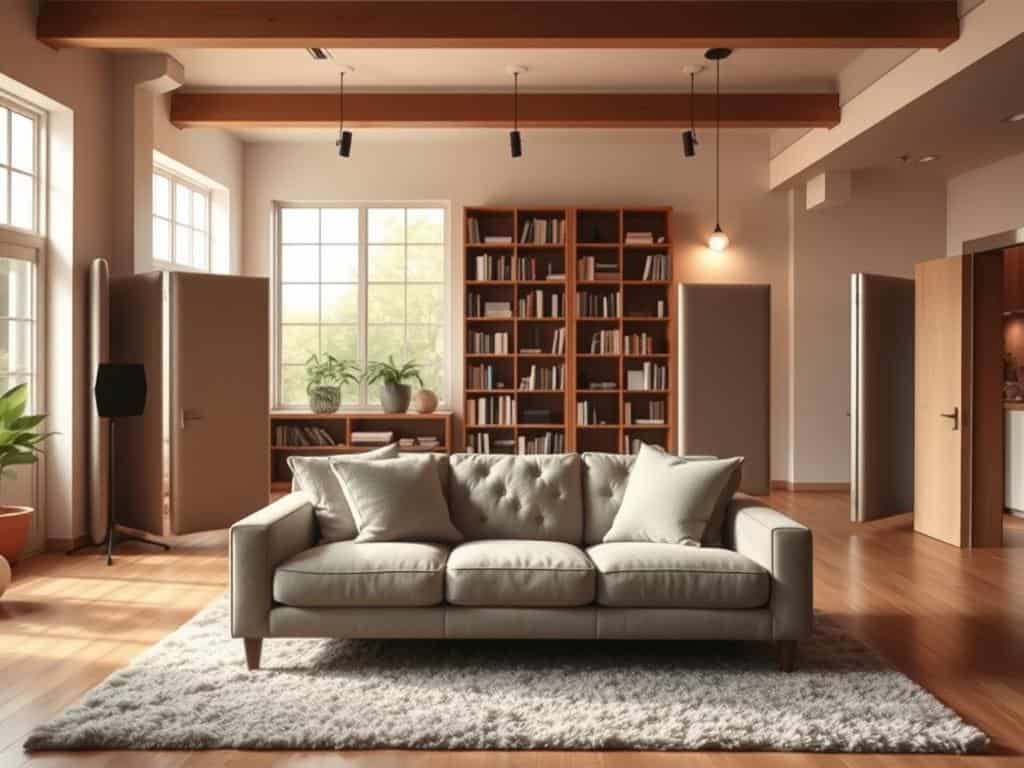
Soft items like curtains, rugs, and furniture can also block sound. Placing heavy curtains and big furniture on walls helps a lot. This way, I can keep sounds out and make my home quieter.
How to Identify Noise Sources for Effective Soundproofing
To effectively tackle the challenges of soundproofing, recognizing the primary sources of noise in my home becomes essential. Understanding the different types of sound can guide me in making informed decisions about my home soundproofing assessment.
Types of Noise: Airborne vs. Impact Sounds
In my journey to soundproofing, I find it essential to differentiate between airborne and impact noise. Airborne sounds, like voices and music, travel through the air. These types of sound can often be minimized through the use of soft materials.
On the other hand, impact sounds such as footsteps or objects being dropped require more robust solutions for effective sound dampening. Understanding these categories allows me to choose the right strategies for my soundproofing efforts.
Identifying Weak Points in Your Home’s Structure
The next step in my soundproofing project involves identifying weak points in my home’s structure. Observing entry points for noise, such as flaws in walls, floors, and ceilings, proves vital. Common weaknesses include thin walls that allow sound to pass easily, unsealed windows that let in noise, and gaps around doors.
By pinpointing these issues, I can strategically direct my home soundproofing assessment efforts, improving the chances of a quieter living environment.
Conclusion
Soundproofing my home has greatly improved my life and stayed within budget. It’s made my living space quiet and peaceful. This has boosted my comfort, privacy, and overall happiness at home.
I’ve learned that small changes can make a big difference. Sealing gaps, using sound-absorbing materials, and upgrading structures work well. Noise pollution is a big problem, affecting many people’s health and well-being.
By focusing on soundproofing, I’ve created a calm environment. This has improved my sleep and daily life. It’s also increased my property’s value, making it more attractive to buyers. Investing in soundproofing has been a wise choice, bringing immediate and long-term benefits.
