Could You Live in a Tiny Home? Here’s What to Know!
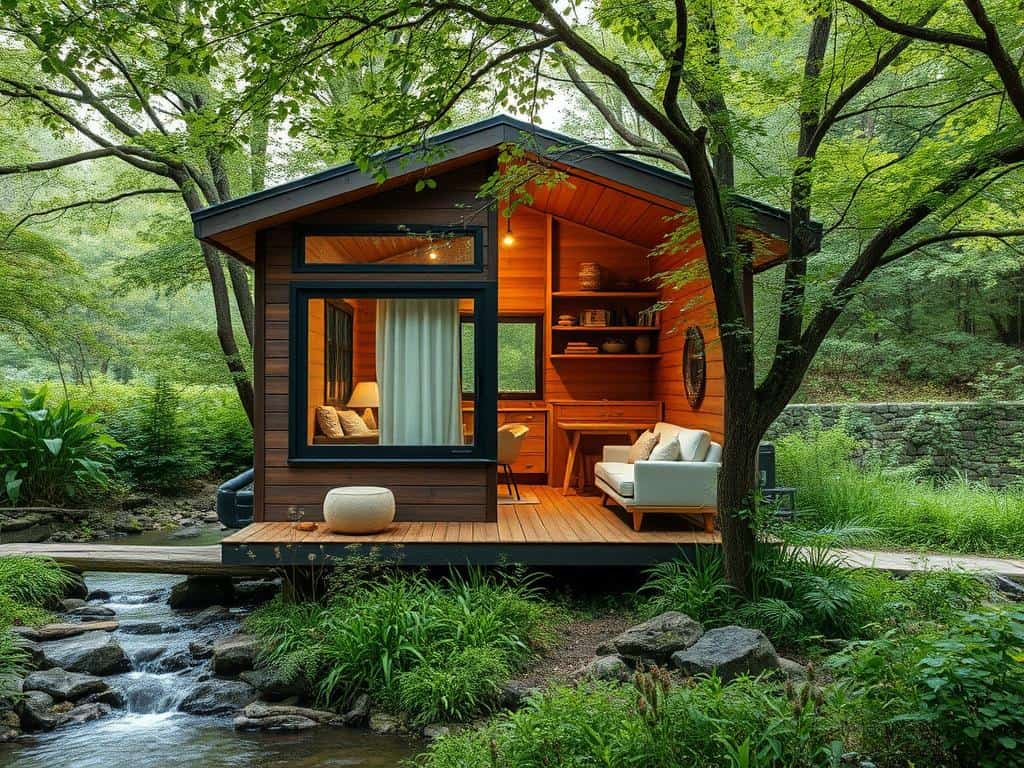
My friends and I were sitting by a fire one night, talking about our dream homes. While some wanted big backyards and kitchens, I was drawn to tiny homes. A friend told us about a 200-square-foot cabin she saw at a minimalism festival.
It wasn’t just the size that caught her eye. It was the freedom from clutter. This made me think about living in a tiny home. With most homes being 2,600 square feet, tiny homes are much smaller, ranging from 100 to 400 square feet.
Could I live with fewer things and focus on experiences? Let’s dive into the world of tiny homes and what they teach us.
Key Takeaways
- Tiny homes are typically 500 square feet or less, contrasting with the average American home size of about 2,600 square feet.
- Living in a tiny home can lead to significant financial savings on monthly expenses, often ranging from $150 to $600.
- Tiny homes utilize approximately 7% of the energy consumed by traditional homes, highlighting their eco-friendly benefits.
- Transitioning to a tiny home often involves purging nearly 75% of one’s belongings to accommodate the smaller space.
- Many people are surprised by how spacious even a 300-square-foot tiny home can feel, thanks to innovative design.
The Rise of Tiny Home Living
The Tiny House Movement has become very popular in recent years. It attracts people looking for different ways to live. They want to focus on experiences, not just stuff.
Downsizing is appealing to many. It brings financial freedom, helps the environment, and strengthens community bonds.
The Tiny House Movement
The Tiny House Movement is all about simplicity. It challenges the idea that we need more stuff. Living small means less distraction and more appreciation for life’s moments.
It’s about finding joy in simplicity. People love the practicality and emotional connection that comes with it.
A tiny home is under 600 square feet. They come in many designs, from fixed to mobile. Living small encourages a minimalist lifestyle and a sense of community.
About half of Americans are interested in tiny homes. This shows a shift towards sustainable and affordable housing.
Benefits of Embracing a Minimalist Lifestyle
Living in a tiny home offers many advantages. It aligns with the goals of financial freedom, caring for the environment, and being mobile. For those thinking about this lifestyle, knowing the benefits can make the decision more appealing.
Financial Freedom and Lower Expenses
One big plus of tiny home living is financial freedom. People often save a lot on housing costs, cutting expenses by 30% to 50%. Monthly costs range from $150 to $600, freeing up money for life’s experiences.
Lower expenses also mean less stress. A survey found that 68% of tiny home residents feel less stressed after moving.
Environmental Impact
Tiny homes also have a positive environmental impact. They use 50% to 80% less energy than regular houses. This makes them a great choice for those who care about the planet.
Residents often practice sustainable living, like composting and harvesting rainwater. This cuts down consumption and waste by 45%. It helps reduce carbon footprints and promotes caring for the environment.
Enhanced Mobility
Mobility is a key aspect of tiny home living. Many homes are built on trailers, making it easy to move. This supports a flexible lifestyle, allowing for new adventures and experiences.
The ability to change environments while keeping comforts at home adds to the excitement. It’s a way to embrace adventure in today’s fast world.
Challenges of Tiny Home Living
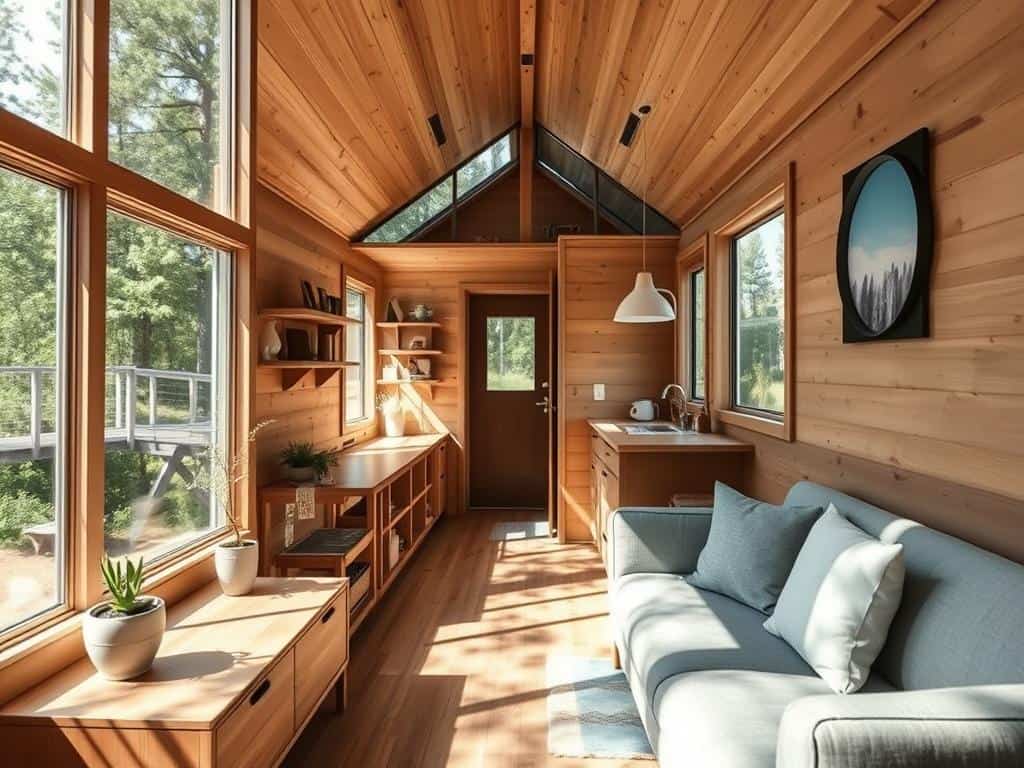
Tiny home living comes with its own set of challenges. One big issue is space limitations. With homes often under 400 square feet, every inch counts. This means finding creative ways to store things and keeping belongings to a minimum.
Without careful planning, clutter can become a problem. It can lead to tripping hazards and even mold growth. Keeping the home clean is key to avoiding these issues.
Space Limitations
The small size of tiny homes can make privacy hard to come by, even for those living alone. Hosting big parties is tough, as tiny homes often can’t fit many guests. This can make it hard to have private talks.
Regulatory Hurdles
Dealing with tiny home regulations is another hurdle. Many places don’t allow tiny homes, and about 60% of U.S. cities don’t see them as homes. This makes it hard to get them set up, with rules on utilities and permits causing delays.
Getting financing and insurance for tiny homes can also be tricky. This adds more complexity for those wanting to own one.
Storage Solutions
Coming up with good storage solutions is key for tiny home dwellers. You often need to cut your belongings by 50% or more. Using furniture that does more than one thing is a must.
Living in a community can help with shared resources. But, the small size of each unit means you have to get creative with managing your daily life.
Conclusion
Living in a tiny home offers many benefits. They are much cheaper than regular houses, costing between $20,000 and $60,000. This is a big difference from traditional homes, which can cost hundreds of thousands of dollars.
These savings mean lower bills for things like utilities and taxes. This helps people save money and feel financially free. It also means they can carry less debt.
Another big plus is how tiny homes are better for the planet. They use less material and energy, making them more eco-friendly. For example, a tiny home only makes about 2,000 pounds of CO2 a year. This is much less than the 28,000 pounds a regular house makes.
Living in a tiny home means having fewer things and less waste. It encourages a more thoughtful way of living. This is good for the environment and helps people live more simply.
But, tiny home living isn’t without its challenges. There are zoning laws and limited space to deal with. Understanding these issues helps people get ready for the journey of tiny home living.
By balancing the good and bad, people can find a fulfilling life in a tiny home. It aligns with their values and dreams. This makes tiny home living a rewarding choice for many.
