Elon Musk’s Brain Chip: Are We Ready for It?
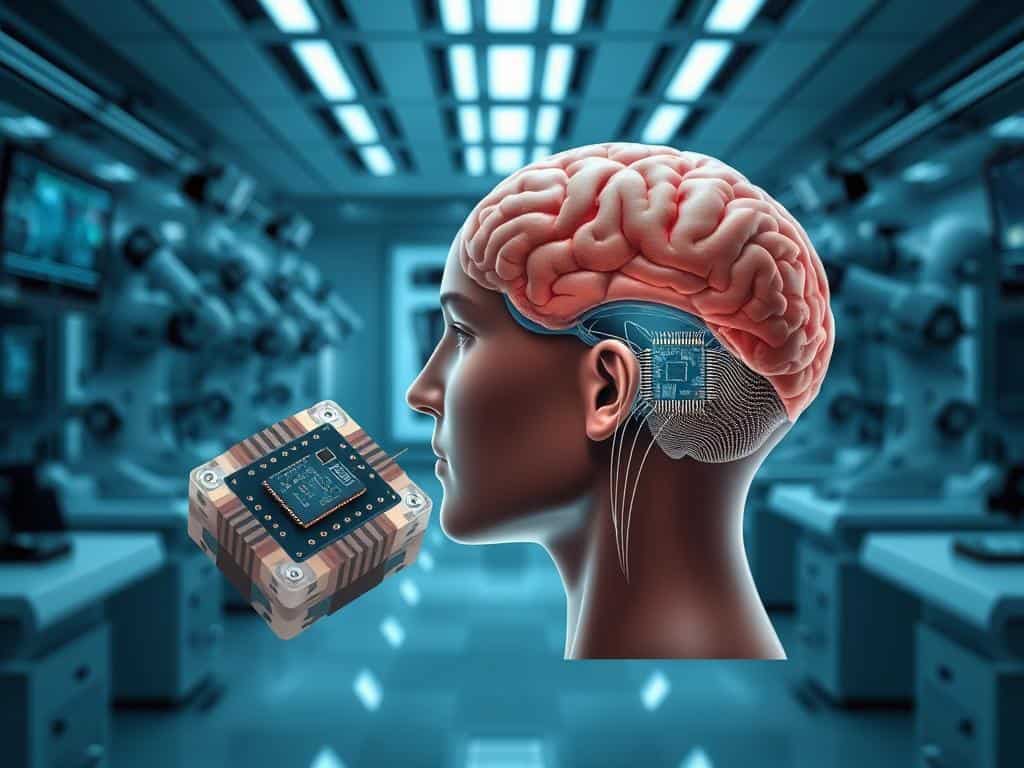
As I scroll through my social media, I see a video of Noland Arbaugh. He’s the first to get a brain-computer interface (BCI) implant. In the video, he plays chess and video games just by thinking. This is thanks to *Neuralink*, a tech developed by Elon Musk.
This tech is not just a gadget. It’s a big step forward in neuroscience that could change lives. Musk plans to start human trials soon. He wants to help people with disabilities by placing tiny chips in their brains. This makes us wonder: are we ready for *Neuralink technology* in our lives?
Thinking about it, I feel both excited and skeptical. The idea of controlling devices with our minds is thrilling. But, there are worries about ethics, safety, and privacy. The journey into this new world of human-technology interaction is just starting. It might be more complicated than we think.
Key Takeaways
- Neuralink’s brain chip could restore functions lost to disabilities.
- The N1 implant is being tested to control an assistive robotic arm.
- Ethical concerns arise over privacy and the misuse of neurodata.
- FDA regulations are key to the safe use of brain implants.
- People have mixed feelings about brain chips, with many being skeptical.
- Musk’s vision is pushing the limits of medical science.
The Vision Behind Neuralink Technology
Brain-computer interfaces (BCIs) are changing how we interact with machines. Neuralink aims to merge advanced tech with our biology. It uses a chip with 1,024 electrodes to read brain signals, helping those with disabilities.
Understanding the Concept of Brain-Computer Interfaces
BCIs connect our brains directly to devices. Neuralink uses special surgery and electrodes to record brain activity. This tech could help paralyzed people move and talk again, and even improve our memory and thinking.
The Neuralink Applications
Neuralink could change lives for those with severe paralysis or brain disorders. It lets people control devices with their minds, giving them more freedom. As it improves, it could help people regain lost abilities and even boost their brain power.
Elon Musk’s Ambitious Goals
Elon Musk wants BCIs to do more than help medical conditions. He dreams of merging human thinking with AI. His goal is to create a neural lace that links AI with our brains. He’s starting with helping those with physical limitations, but his vision is much bigger.
Challenges Facing Neuralink Technology
Neuralink technology faces many challenges, mainly as it moves towards human trials. It’s important to address ethical issues, like the impact of brain implants. These devices are invasive, raising questions about their effectiveness and safety.
There are also worries about how they might affect mental privacy. The connection with artificial intelligence could change personal autonomy.
Ethical Concerns Regarding Brain Implants
There are many ethical worries about using brain implants in humans. Animal testing has seen over 1,500 deaths, showing the need for strict ethics. As the tech improves, it’s vital to follow responsible practices to prevent misuse.
The large amounts of brain data collected raise concerns. This data could lead to ethical breaches, making it essential to protect rights.
The Skepticism Surrounding Human Trials
The scientific community is skeptical about human trials. Neuralink got FDA approval in May 2023, but past animal testing issues are a concern. The company hasn’t registered its trials on ClinicalTrials.gov, which is a transparency standard.
This lack of transparency could lead to backlash. It might slow down future neurotechnology advancements.
Understanding the Regulatory Hurdles
Regulatory challenges are a big obstacle. The FDA’s approval is a step forward, but there are worries about oversight. The fast pace of research has led to more errors in trials.
Meeting safety standards is hard, which could delay the technology’s market entry. Regulatory bodies aim to balance innovation with safety.
Conclusion
Reflecting on Neuralink and Elon Musk’s goals, it’s clear that technology could change our lives and society. The benefits, like helping those with speech problems and fixing lost brain functions, are exciting. But, we also face big challenges.
There are worries about brain implants and safety in human tests. We need to be careful and think deeply about BCIs. Setting up rules for this technology is key. We must balance new discoveries with ethics and think about how BCIs will affect us all.
The journey ahead is uncertain, but we’ve learned a lot. Neural implants could change our world for the better. But, we must talk, ask questions, and stay informed. This way, we can move forward wisely in the BCI world.
