Alexa vs. Siri: Which One is Actually Smarter?
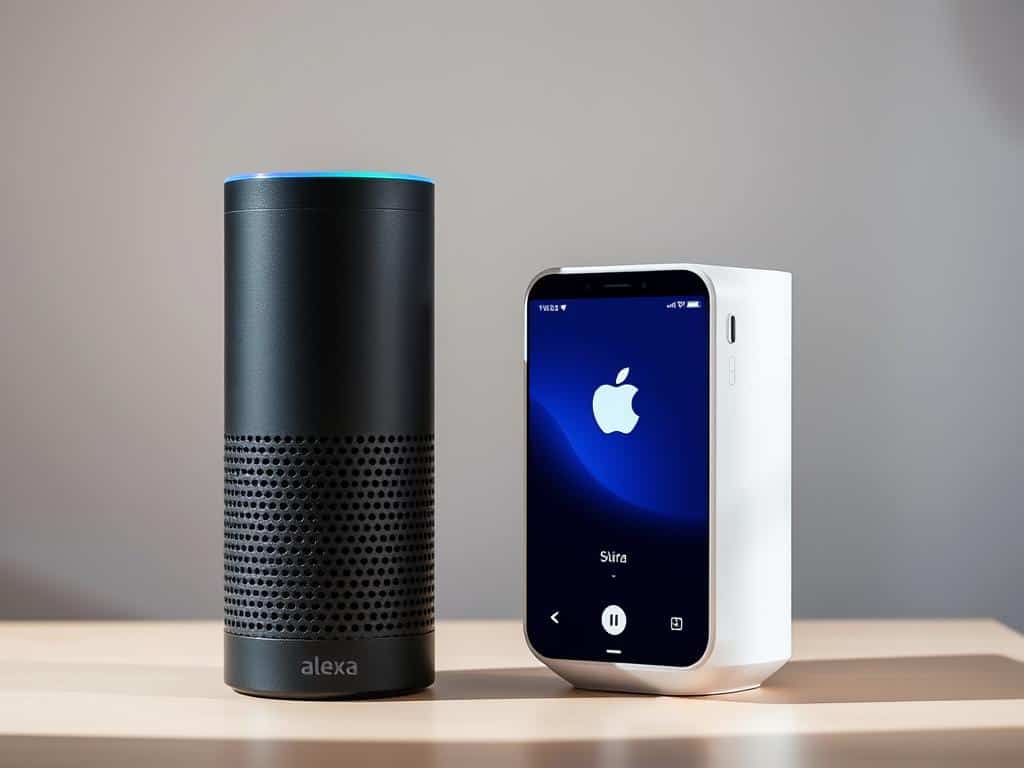
One evening, I found myself in a living room showdown. My iPhone, with Siri, was ready to help with daily tasks. Next to it, my Echo Dot, powered by Alexa, was eager to manage my smart home and play music. This moment was more than personal—it showed a growing trend in our digital lives.
The rivalry between two top voice assistants was clear. With so many features, choosing the smarter one was tough. This comparison is more intense than ever, as both assistants have grown and now dominate AI. Let’s explore how these two iconic voice assistants have changed our tech interactions.
Key Takeaways
- Amazon Alexa was launched in November 2014, while Siri debuted in October 2011.
- Both assistants have their unique strengths: Alexa excels in smart home integration, while Siri focuses on personal organization.
- Google Assistant offers detailed search capabilities, making it useful for complex queries.
- Cultural adaptability is a strong point for Google Assistant, supporting a vast number of languages.
- Understanding the functionalities of AI assistants can help users make informed decisions on device compatibility.
The Evolution of Voice Assistants
The journey of voice assistants has been amazing. It’s filled with big steps in voice recognition and AI. I’ve seen these assistants grow from simple beginnings to today’s smart systems.
Introduction to Siri
Siri, Apple’s famous voice assistant, started in 2011. It marked the beginning of today’s voice assistants. It uses smart algorithms and natural language to understand what we say.
I love how Siri makes talking to my Apple devices easy. It sends messages and changes settings for me. Siri gets better at understanding me over time, showing how AI has improved.
Overview of Alexa
Amazon’s Alexa came out in 2014 with the Echo smart speaker. It shows how these tools have become a big part of our homes. Alexa uses machine learning to do complex tasks and talk to us.
It’s amazing to see how far voice recognition has come. From IBM’s Shoebox, which could only understand 16 words, to today’s smart assistants. They can now understand many different ways of speaking.

Key Features of Voice Assistants
Voice assistants have changed how we use technology. Key features like compatibility and device integration are important. Siri and Alexa have different strengths in smart home integration and multi-user support.
Compatibility and Device Integration
Siri works only with Apple devices, which might limit its use. This can be a problem for users wanting to use different devices. On the other hand, Alexa works with over 140,000 smart home devices.
It’s great for those who want to connect many devices in their home. Alexa lets users link various brands and products together. This makes their smart home system more unified.
Voice Command Efficiency
How well voice commands work is key to a good user experience. Alexa’s multi-user support makes it better for families. It lets each person have their own settings and voice commands.
This is super helpful in big families where everyone has different likes. Alexa’s ability to understand and adapt to each user makes using smart home devices more fun and personal.
Conclusion
Choosing the right voice assistant depends on what you need and like. If you want a smart home that works with many devices, Alexa is a great choice. It’s very compatible and has strong home automation features.
If you’re all about Apple and want things to work smoothly together, Siri might be better. Both assistants are smart, but they serve different needs. Your choice should match your lifestyle and tech setup.
Before picking a voice assistant, think about your current setup and goals. The voice tech market is always changing. The assistant you choose will change how you do daily tasks, from shopping to work.
