How Close Are We to Fully Self-Driving Cars?
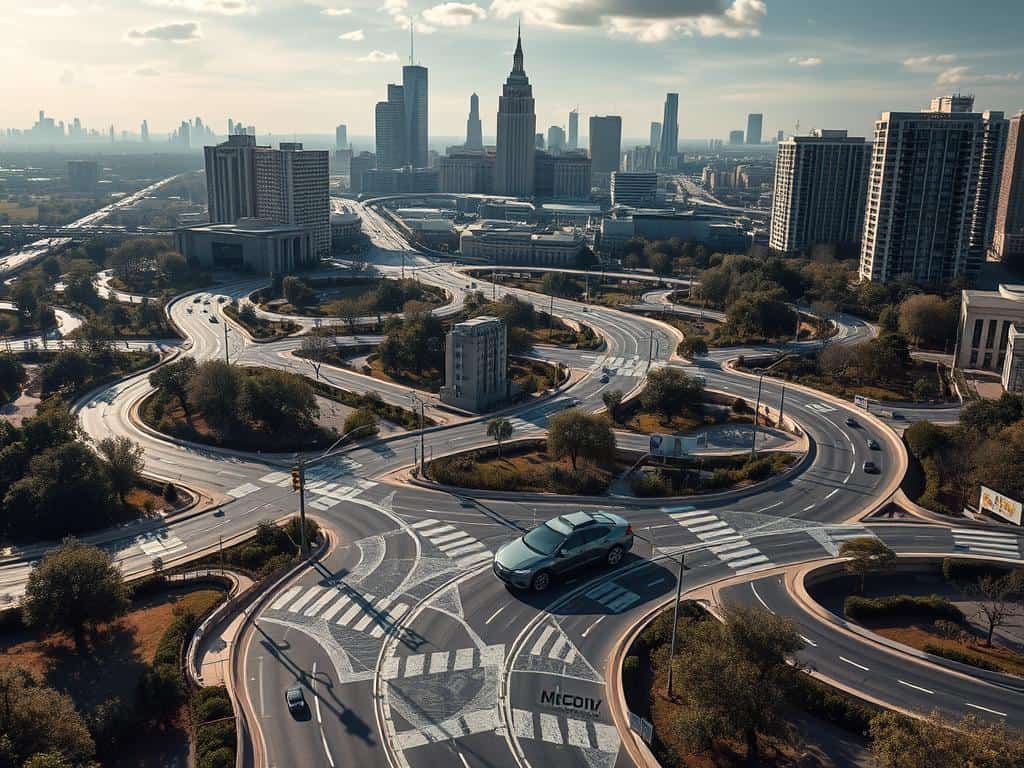
Standing at a bustling intersection, I often think about the future of transportation. I see a lot of vehicles trying to get through. Just a few years ago, self-driving cars seemed like something from science fiction. But now, thanks to companies like Tesla, Ford, and Google, they’re becoming a reality.
As we get closer to having fully self-driving cars, we must think about the excitement and challenges. The automotive industry believes we’ll have these cars by 2035. I wonder if we’re ready for this new era of smart transport.

Key Takeaways
- The automotive industry expects fully self-driving cars by 2035.
- Cars manufactured today may remain on the road for over 20 years, impacting the pace of transition.
- AI and machine learning play a big role in making driverless vehicles.
- Nearly 75% of US drivers are scared to ride in self-driving cars.
- Up to 15% of new cars could be fully autonomous by 2030.
- Advanced Driver Assistance Systems (ADAS) are becoming more common in new vehicles.
- Experts often say they’re “always five years away” from fully self-driving cars.
The Current State of Self-Driving Cars
The world of self-driving cars is full of challenges and breakthroughs. The goal of making cars fully autonomous is ongoing. It focuses on new technologies and the key players in this field.
Technological Advances in Autonomous Vehicles
Self-driving tech has come a long way, thanks to AI and better sensors. Lidar sensors, ISA, and ADAS have made cars smarter. But, they face hurdles like bad road conditions and unpredictable people.
Major Players in the Industry
Companies like Tesla are leading the way, selling cars with Full Self-Driving (FSD) tech. Ford aims to automate more, and Google’s Waymo is pushing the limits with tests and new ideas. By 2030, 15% of new cars might be fully autonomous, changing the car world and how we travel.
Challenges Facing the Transition to Fully Autonomous Vehicles
The journey to fully autonomous vehicles is filled with obstacles. These include regulatory and legal hurdles, as well as how humans interact with machines. It’s clear that a unified strategy is essential to make self-driving cars a part of our daily lives.
Regulatory and Legal Hurdles
Regulatory challenges are a major hurdle for autonomous vehicles. Laws vary by state and country, dealing with safety, liability, and infrastructure needs. City planners, like those in Seattle, face these issues head-on, thinking about how self-driving cars will fit into traffic.
Seattle’s budget relies heavily on traffic fines. With more self-driving cars, new ways to make money might be needed. This could include taxes based on miles driven or car registration.
Human-Machine Interaction Issues
Human interaction with machines is another big challenge. Most accidents with self-driving cars are caused by human mistakes. This shows we need better communication between drivers and cars.
Many people don’t understand or trust how these cars work. This lack of trust is a big issue. To build trust, we need to educate people and introduce these cars slowly. For example, starting with controlled environments can help people get used to them.
How Autonomous Are Today’s Vehicles?
Driving assistance technology has made big strides in modern vehicles. It’s key for both buyers and industry experts to understand these advancements. Today, cars offer everything from no automation to semi-autonomous features, making driving safer and more convenient.
Current Levels of Automation Explained
Automation levels range from Level 0 (no automation) to Level 5 (full autonomy). Most cars today are at Level 2. They have advanced systems that help with steering and speed but always need a human to be in control.
Level 3 automation is being worked on, allowing systems to take over in certain situations. But it’s not yet for sale. Brands like Audi and NAVYA are showing off semi-autonomous tech in controlled tests.
Features Available in Modern Vehicles
Today’s cars come with many semi-autonomous features. You’ll find adaptive cruise control, lane warning systems, and automatic emergency braking. Many people want these features in their cars, and manufacturers are listening.
Companies like Honda are making these features affordable. As technology improves, we can expect even safer and more convenient driving experiences.
Conclusion
The future of self-driving cars is both thrilling and complex. New tech, like advanced driving systems and AI, is setting the stage for fully autonomous vehicles. Yet, big challenges lie ahead.
Most traffic deaths are caused by human mistakes. This shows how urgent it is to fix laws and gain public trust in this new tech.
In 2022, 42,795 people died in U.S. traffic accidents. This number highlights the tough road we’re on. Self-driving cars, like Waymo’s, have shown they can be safer. But, people are getting more skeptical.
Despite the hurdles, self-driving cars could save lives and cut down on pollution. We’re working through issues of trust, laws, and tech. Self-driving cars are coming, and they will change how we travel.
While we’re not there yet, the progress is promising. It looks like a better future is on the way.
