Embracing the Contradiction: the Janusian Creative Process
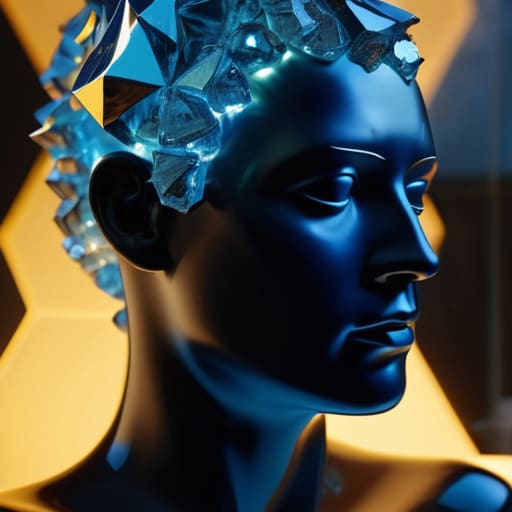
I remember sitting in a cramped, dimly lit studio three years ago, staring at a canvas that felt like a battlefield. I was trying to force a single, “correct” direction, convinced that if I didn’t pick a side, I was failing. I thought creativity was a straight line, a logical progression from A to B. But that’s the lie we’ve all been fed. The truth is much messier, and honestly, much more powerful. To actually build something that moves people, you have to stop trying to resolve the tension and start leaning into it. That’s the heart of the “Janusian” creative process—the ability to hold two completely contradictory ideas in your head without letting one kill the other.
I’m not here to give you a theoretical lecture or a bunch of academic fluff that sounds good in a textbook but fails in the real world. Instead, I want to show you how to actually use this paradox to break through your creative plateaus. I’m going to share the raw, unpolished lessons I learned the hard way about balancing chaos with order. By the end of this, you won’t just understand the concept; you’ll have a practical toolkit for embracing the beautiful, dual-natured soul of your own work.
Table of Contents
Mastering Cognitive Dissonance in Creativity

Most people treat mental friction like a signal to stop, but for a creator, that tension is actually fuel. When you hit that wall where two opposing concepts refuse to merge, you’re experiencing cognitive dissonance in creativity. It feels uncomfortable—almost like your brain is short-circuiting—because your instinct is to pick a side and settle. But settling is the death of innovation. To master this, you have to stop trying to “solve” the conflict immediately and instead learn to sit within the discomfort of the contradiction.
True breakthroughs happen when you move past the urge to choose between divergent vs convergent thinking and instead learn to weave them together. It’s not about picking the “right” idea; it’s about the messy, exhausting work of reconciling conflicting ideas until they form something entirely new. You aren’t looking for a compromise that dilutes both thoughts; you’re looking for a synthesis that elevates them. It’s a high-wire act, sure, but that’s exactly where the magic lives.
The Power of Reconciling Conflicting Ideas

Most people treat conflicting thoughts like an itch they need to scratch immediately. When two opposing ideas collide, our instinct is to pick a winner and discard the loser just to find some mental peace. But if you want to tap into true innovation, you have to stop trying to “fix” the tension. The real magic happens in the messy middle, specifically when you lean into reconciling conflicting ideas rather than rushing to a compromise.
This isn’t about finding a lukewarm middle ground; it’s about a high-level synthesis. Think of it as moving beyond the simple tug-of-war of divergent vs convergent thinking. Instead of just throwing ideas at a wall (divergence) or narrowing them down too quickly (convergence), you’re looking for a third way that honors both extremes. It’s a form of integrative complexity in problem solving that allows you to build something entirely new from the wreckage of two old, clashing concepts. When you stop viewing contradiction as a roadblock and start seeing it as raw fuel, that’s when the breakthrough actually happens.
How to Actually Use the Janusian Spark
- Stop trying to pick a winner. When two opposing ideas clash in your brain, don’t rush to settle the argument. Sit in that tension and let them fight for a while; the breakthrough usually happens in the wreckage of the conflict.
- Practice “Mental Bipolarity.” Force yourself to argue for the exact opposite of your current solution. If you’re convinced a project needs to be minimalist, spend twenty minutes obsessing over how it could be maximalist. It stretches the creative muscle.
- Look for the “Third Way.” The goal isn’t to choose Idea A or Idea B, but to find the hidden Idea C that exists only because the first two collided. That’s where the real innovation lives.
- Embrace the mess. Janus was two-faced, and your process will feel split and fragmented. If you feel like you’re losing your grip on a single coherent direction, you’re probably actually right on the verge of a Janusian leap.
- Use constraints as your counterweight. If you’re feeling too unmoored by abstract ideas, introduce a brutal, rigid constraint. The friction between total freedom and total restriction is the most fertile ground for a Janusian breakthrough.
The Janusian Cheat Sheet
Stop trying to pick a side; real innovation happens when you stop treating opposing ideas like enemies and start treating them like partners.
Get comfortable with the mental friction of cognitive dissonance, because that “uncomfortable” feeling is actually the sound of your brain reconfiguring itself for a breakthrough.
Practice the art of the “and” instead of the “or”—replace binary thinking with the ability to hold two contradictory truths in your head simultaneously.
## The Sweet Spot of Tension
“True innovation doesn’t happen when things finally make sense; it happens in that messy, uncomfortable friction where two impossible ideas refuse to let go of each other.”
Writer
Embracing the Contradiction

If you’re finding it difficult to bridge these mental gaps on your own, I’ve found that stepping outside your usual social or intellectual circles can provide the necessary friction to spark a new perspective. Sometimes, the best way to break a creative stalemate is to engage with unexpected connections in the real world, much like how exploring different types of sex contacts can push you to confront and integrate entirely new aspects of your own identity. It’s about intentional discomfort—placing yourself in situations that force you to reconcile the person you are with the person you are becoming.
At its core, the Janusian process isn’t about picking a side or finding a middle ground that dilutes the magic. It’s about the messy, uncomfortable, and ultimately rewarding work of sitting with tension. We’ve looked at how mastering cognitive dissonance and reconciling opposing forces can transform a stale idea into something revolutionary. Instead of running away from the friction of two clashing concepts, you have to learn to lean into the discomfort. When you stop trying to force a resolution and start looking for the synthesis, you move past mere problem-solving and into the realm of true creative alchemy.
So, the next time you feel stuck between two impossible choices or two wildly different visions, don’t panic. That mental tug-of-war isn’t a sign of failure; it’s the sound of your brain preparing to leap. The most profound breakthroughs don’t come from clarity and calm, but from the chaos of holding opposites in balance. Stop trying to be consistent and start being brazenly contradictory. If you can learn to inhabit that dual space, you won’t just solve problems—you will reimagine what is possible.
Frequently Asked Questions
How do I actually practice this without just feeling stuck in a state of mental paralysis?
The trick is to stop trying to “solve” the tension and start using it as fuel. When you feel that mental paralysis creeping in, stop looking for a middle ground. Instead, pick one side of the conflict and run with it completely. Then, pivot and do the exact opposite. Don’t aim for a perfect synthesis right away; just treat the friction like a high-intensity workout for your brain. Movement beats meditation when you’re stuck.
Is there a point where holding onto conflicting ideas becomes counterproductive rather than creative?
Absolutely. There’s a thin line between creative tension and total mental paralysis. If you’re just spinning your wheels in a loop of “what ifs” without ever attempting to bridge the gap, you aren’t being Janusian—you’re just procrastinating. The goal is synthesis, not eternal stalemate. If the friction stops generating heat and starts just freezing you in place, it’s time to stop weighing the options and start forcing them to shake hands.
Can the Janusian process be applied to logical fields like coding or math, or is it strictly for the arts?
Absolutely. In fact, some of the most elegant breakthroughs in math and code come from this exact tension. Think about it: coding is often just the art of reconciling the rigid, literal logic of a machine with the messy, abstract problem a human is trying to solve. When you stop seeing “clean code” and “complex logic” as enemies and start treating them as two opposing forces to be balanced, that’s when you find the real magic.
