Lab-Grown Meat? The Future of Food Will Surprise You!
In my favorite diner, I overheard a couple talking about meat alternatives. They were discussing the ethics of eating meat. This made me think about how much meat we eat in the U.S. and how it’s growing globally.
Billions of dollars are going into lab-grown meat. It feels like a big change is coming in our food future.
Last year, regulators let two companies sell lab-grown chicken. But, you can’t buy it anywhere in the U.S. yet. This has sparked debates among people and lawmakers. Some states want to ban lab-grown meat.
I thought about my meal and wondered if lab-grown meat is the future. Or is it just a passing trend? Let’s dive into the world of lab-grown meat and what it means for our food and the planet.

Key Takeaways
- Billions of dollars are being invested in lab-grown meat innovations.
- Two companies gained regulatory approval for lab-grown chicken sales last year.
- Lab-grown meat is currently unavailable for purchase in the U.S.
- Legislation aiming to ban lab-grown meat has been proposed in several states.
- Public perception of lab-grown meat remains skeptical, with many Americans hesitant to try it.
- The lab-grown meat market is forecasted to grow at an annual rate of 15% through 2030.
- Interest in the environmental impact of traditional livestock farming continues to rise.
The Emergence of Lab-Grown Meat
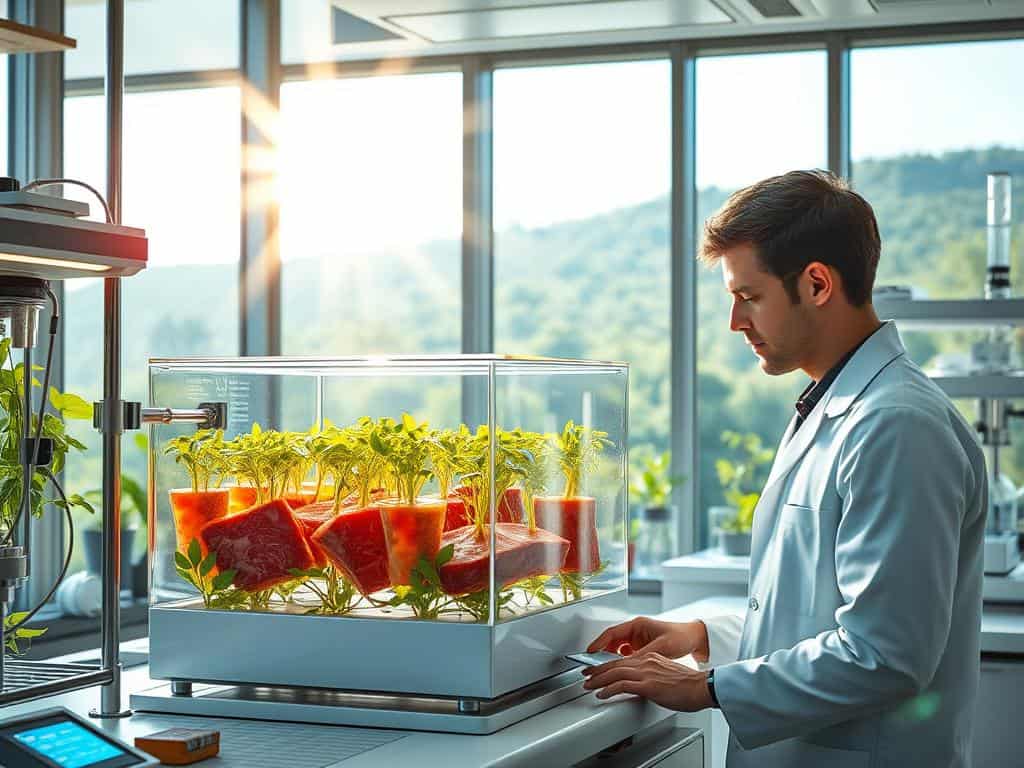
Meat consumption worldwide is growing fast. People are looking for new ways to farm meat. Lab-grown meat, or cultivated meat, is a new way to make meat. It grows animal cells in a lab, not on farms.
This idea was once science fiction. Now, it’s a real way to make food. It could change how we eat.
What is Lab-Grown Meat?
Lab-grown meat doesn’t need animals to be raised and killed. It looks and tastes like real meat. This new way of making meat uses advanced technology.
It makes meat production easier and more humane. Investors have put over $2 billion into this technology. This shows how big its future could be.
Technological Breakthroughs
Technology is key to making lab-grown meat. Companies like Memphis Meats and Mosa Meat have made big steps. They’ve gone from simple meat structures to complex products.
They’ve also made meat taste and feel like the real thing. Now, they don’t need animal products to grow meat. This means they can make more meat on a bigger scale.
Sustainability and Environmental Impact
In today’s climate crisis, making our food systems sustainable is key. The livestock industry is a big contributor to greenhouse gas emissions, making up about 14.5% of them. Lab-grown meat could be a big help, reducing emissions by up to 96% compared to traditional meat.
Reducing Greenhouse Gas Emissions
Greenhouse gas emissions from food production are a big worry. Food systems are responsible for about 30% of global emissions, with livestock being a major culprit. Switching to lab-grown meat could greatly reduce our carbon footprint and make our diets more sustainable.
Resource Efficiency
Lab-grown meat uses much less energy, land, and water than traditional meat. For example, making one kilogram of beef can release about 60 kilograms of greenhouse gases. Lab-grown meat production cuts down on this environmental impact a lot.
Producing lab-grown protein is more energy-efficient, needing only 3 units of energy for every 1 unit needed for traditional meat. This makes lab-grown meat a sustainable option, helping us face the challenges of a growing global population.
The Future of Food: Nutritional Considerations
The rise of lab-grown meat is exciting for nutrition. With a growing global population, we need new ways to feed everyone without harming health. Lab-grown meat could be as nutritious as traditional meat, but better.
It can have less bad fat and more good fats. This makes lab-grown meat a key player in the future of food.
But, many people are hesitant to try lab-grown meat. They worry about it being made in labs. Surveys show, though, that more people are curious.
Learning more about lab-grown meat’s benefits is important. It helps people see its value for a healthier diet.
Lab-grown meat is also safer than regular meat. It has fewer germs. As we learn more, we’ll see lab-grown meat as a healthy choice. It could change how we eat.
Conclusion
Lab-grown meat is changing the food scene in big ways. It’s a sustainable choice that could help our planet. This method cuts down on greenhouse gases and uses resources better.
But, getting people to try lab-grown meat won’t be easy. There are cultural and economic hurdles to cross. With the world’s population set to hit 10 billion by 2050, we need to act fast.
Working together, we can make lab-grown meat a reality. It’s not just about a new food choice. It’s about making our food system better for the planet and our health.
